
Laser soldering / Induction
Laser soldering and induction soldering are contactless, single-point soldering processes. Instead of a soldering tip, a laser beam or an alternating electromagnetic field transfers the energy to the solder joint. In automated soldering, both processes are increasingly replacing the soldering iron — and the result is determined not only by the equipment, but also by the consumables: solder and flux.
Two processes, two strengths
Instead of a soldering tip, a laser beam or an alternating electromagnetic field transfers the energy to the solder joint. Which process is suitable depends primarily on the size of the solder joint.
Induction soldering
Induced eddy currents heat the workpieces, as it were, from the inside. The heat is generated only in the base metal; the circuit board remains cold.
Strengths
- energy-efficient
- the circuit board remains cold
- particularly suitable for mass production
Limitations
- Induction loops are oversized for small solder joints
- High-frequency radiation can damage sensitive circuits
Laser soldering
The laser beam can reach even the finest solder joints on printed circuit boards. As only the beam comes into contact with the solder, the risk of contamination is low.
Strengths
- Reaches the finest solder joints
- Low risk of contamination
- Uniform preheating of both soldering surfaces
Feedable wire diameters
Almit’s bestsellers for laser soldering
Almit stocks these five products for laser and induction soldering.
-
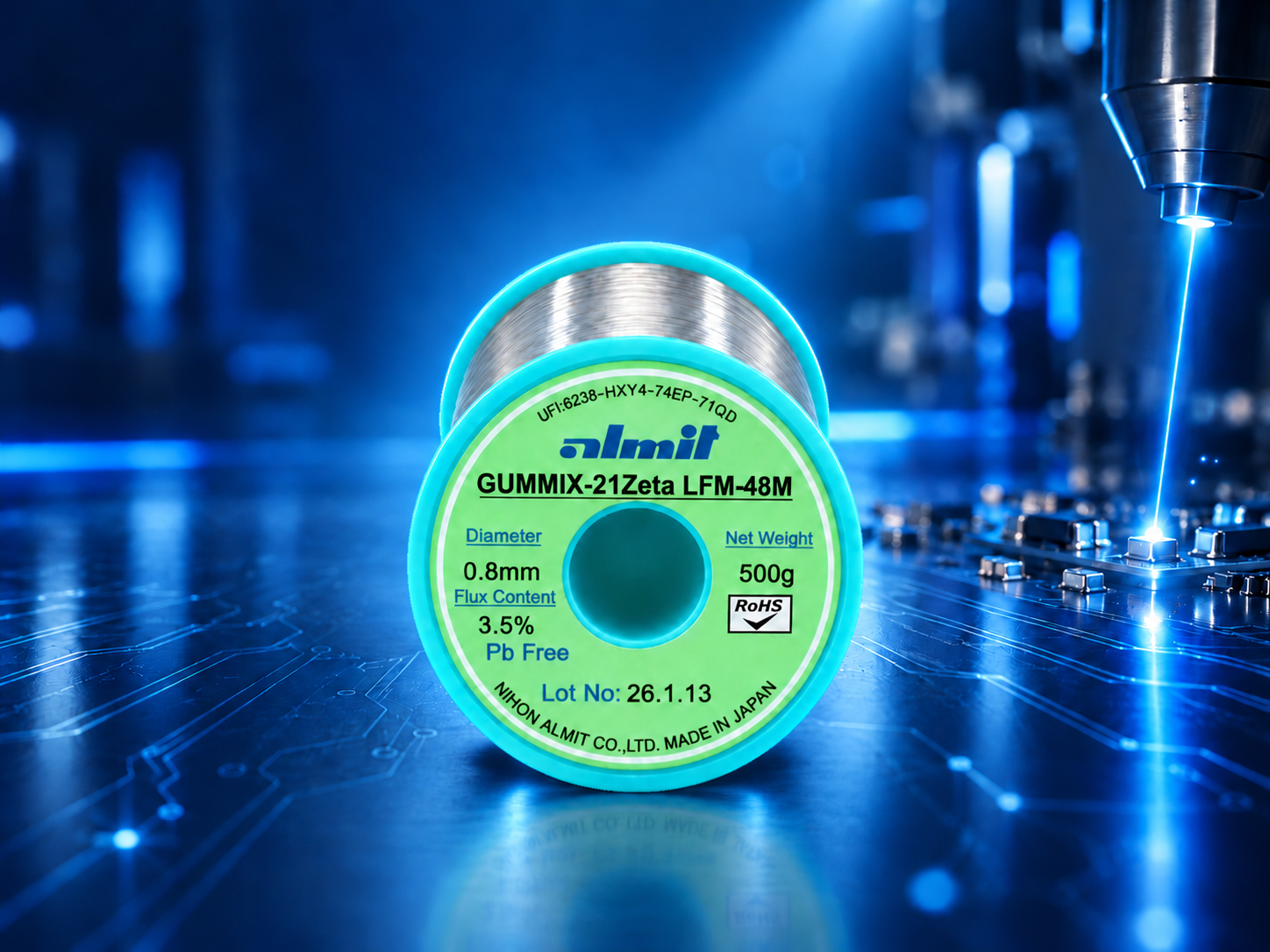 Top sellers for good reason
GUMMIX series
The world’s first flux to make laser soldering work at all – spatter reduced to a minimum.
Find out more
-
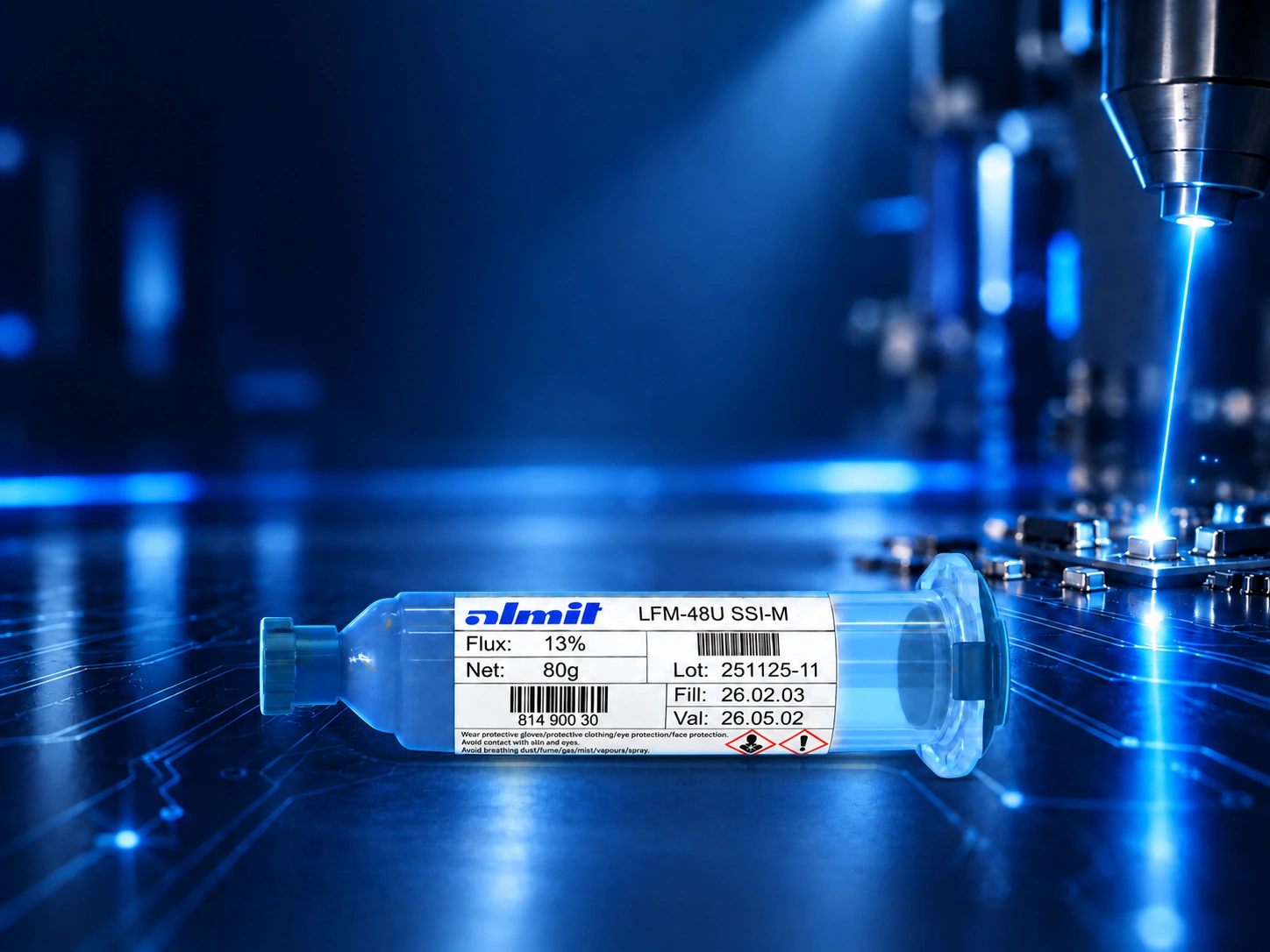 Specially developed for contactless soldering
Laser pastes
SSI-M halogen-activated, NH-MDL halogen-free – both developed for laser, light and induction systems.
Find out more
-
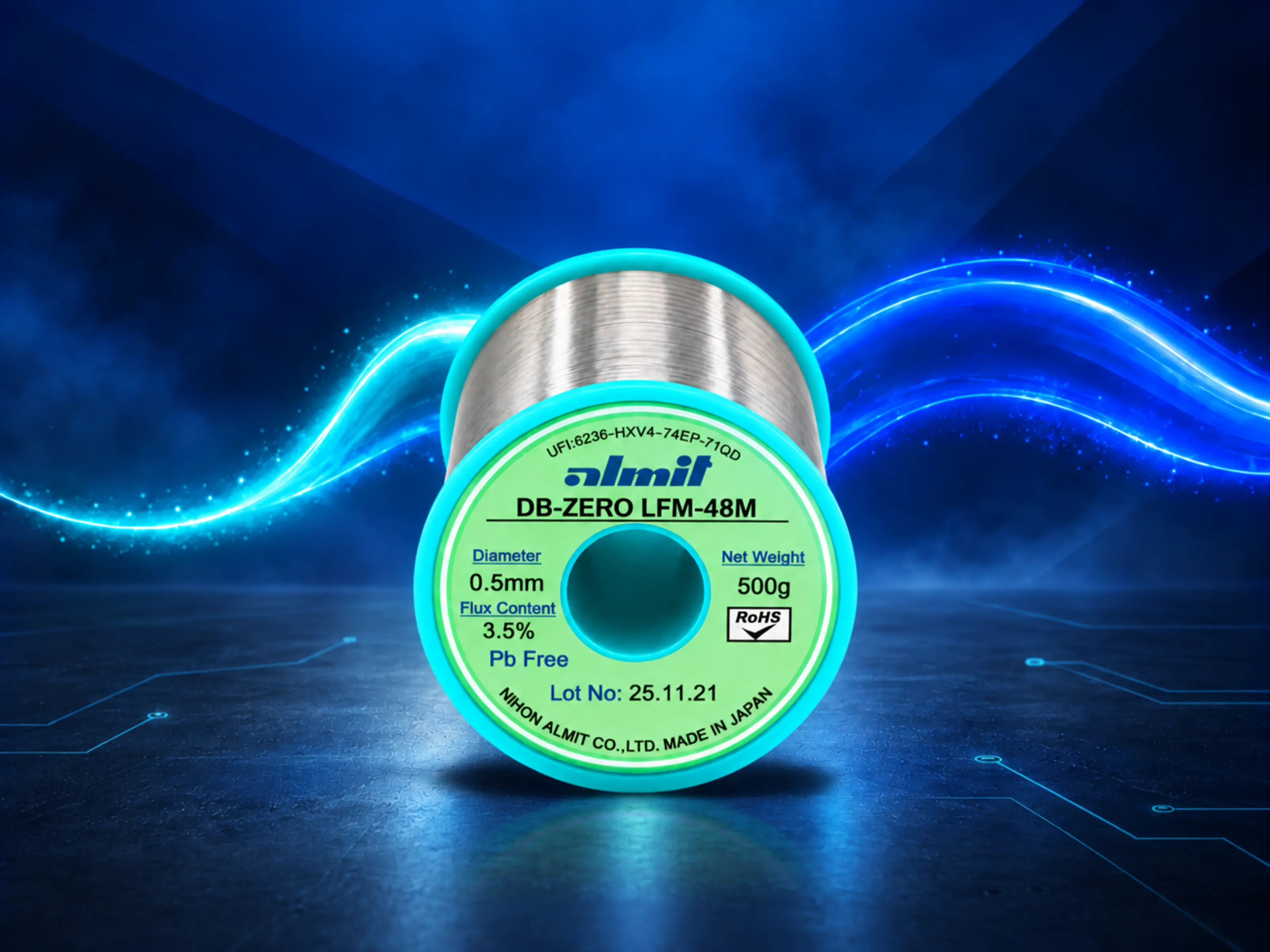 Dual boost for unique wetting
Dual-Boost series
DB-1 RMA combines a fast-acting activator with a long-lasting one – the solder flows immediately into the plated-through hole.
Find out more
-
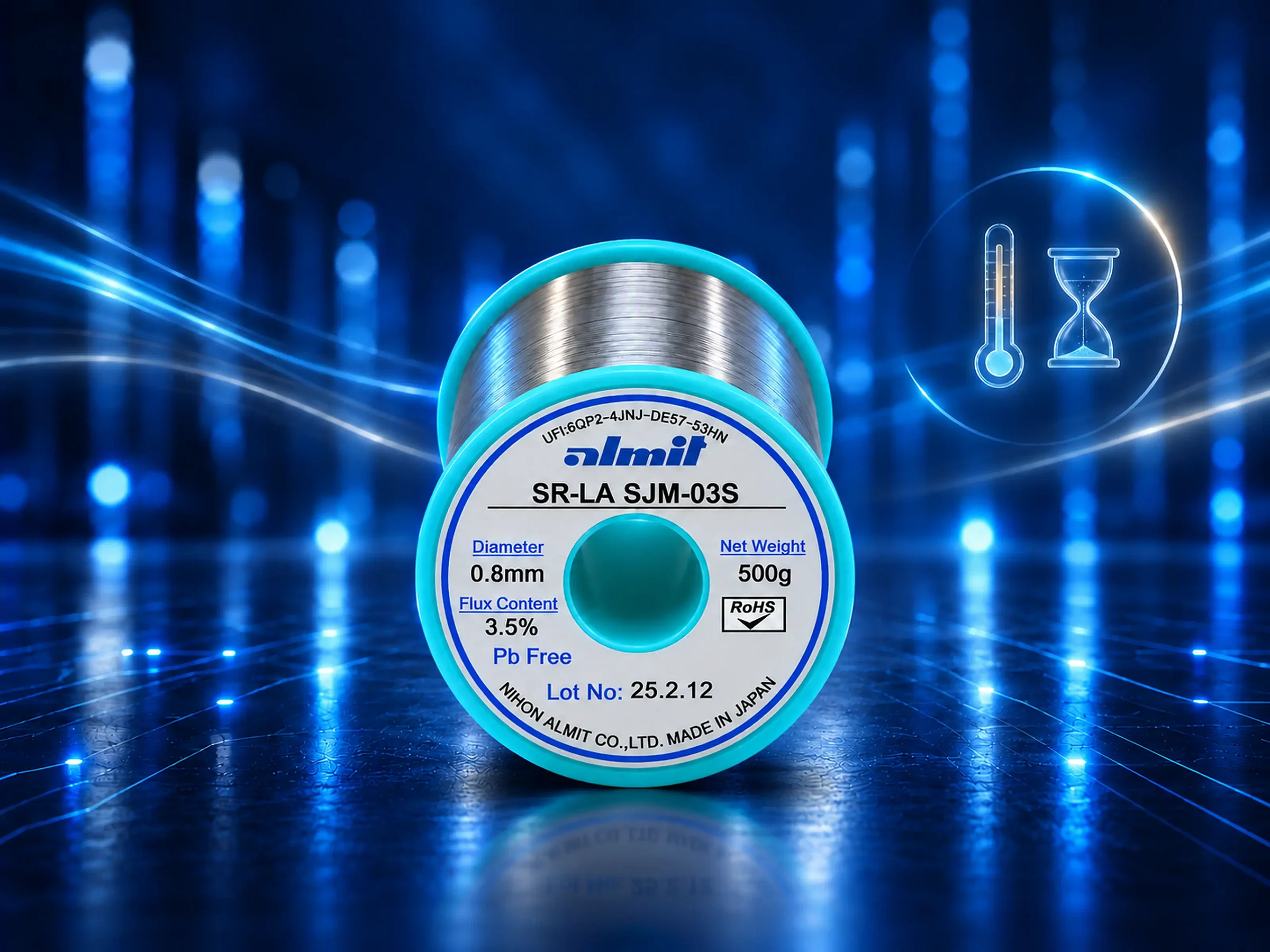 Lead-free with excellent strength
SJM Series
No cracking even after 2,000 thermal cycles; silver content selectable from 0.3 to 4 %.
Find out more
-
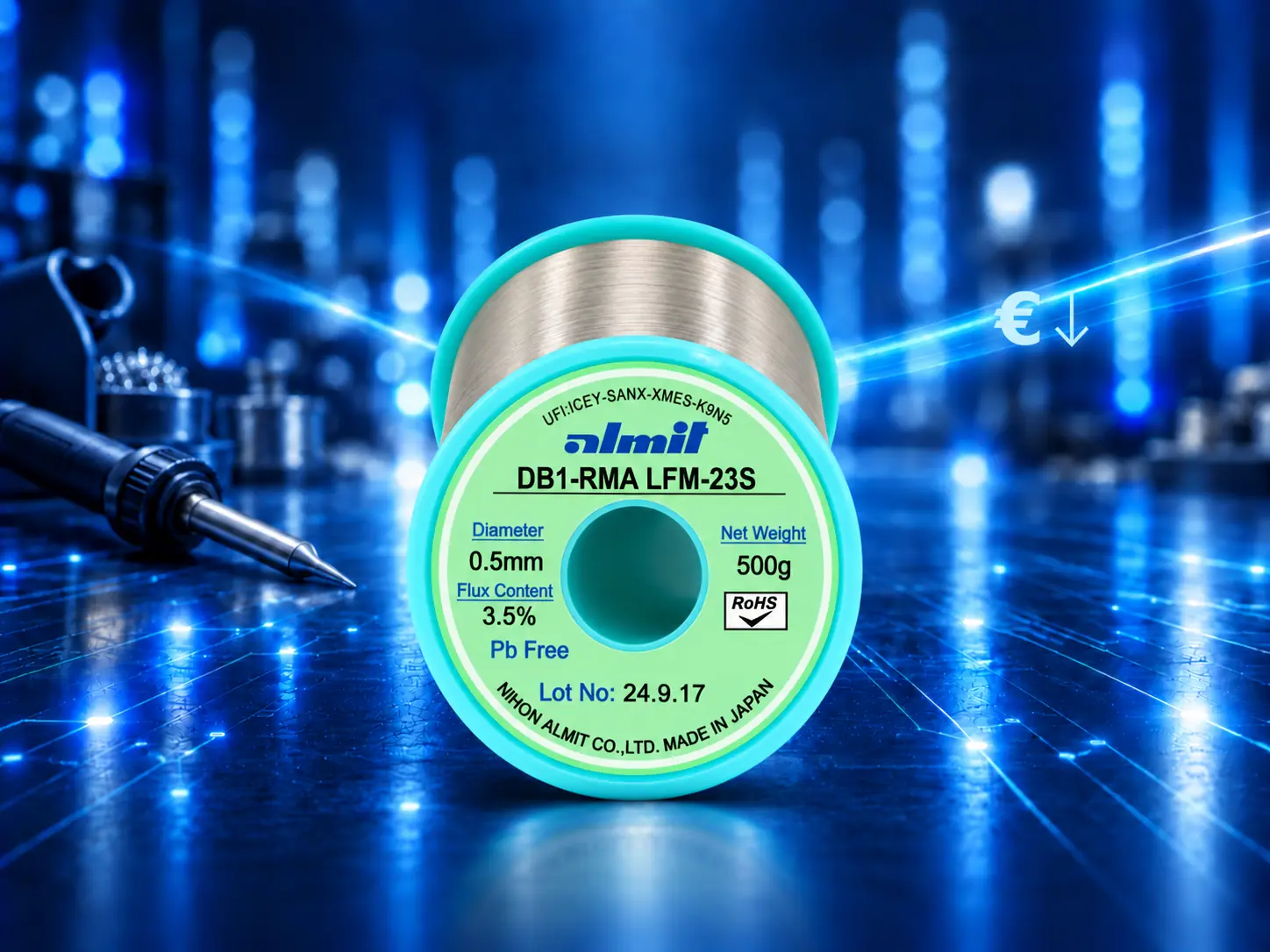 Eutectic solder, 0 % silver content
LFM-23 S
The silver-free SnCuNi alloy, eutectic at 228 °C – for processes that require silver-free solder.
Find out more
The process in three steps
-
1
Preheating
The laser preheats both soldering surfaces evenly.
-
2
Melting
The solder wire, having softened, melts completely on contact.
-
3
Dosing
The required remaining amount of solder is added to the melt.
Why the flux makes all the difference
Contactless methods apply the energy instantaneously. A flux that is ejected during this process contaminates the assembly and the equipment – in the case of laser systems, this is precisely what determines the cleaning intervals for the protective lenses. Interruptions in the flux core lead to inadequate wetting and consequently to soldering defects.
- Spatters reduced to a minimum
- No detachment of flux residues
- Continuous core without air or moisture inclusions
4 ppm instead of 400 ppm
The continuous flux core of the GUMMIX series ensures an average defect rate of 4 ppm – compared with around 400 ppm for a conventional solder wire.
Suitable solder wires and solder pastes
Solder wires
GUMMIX SB RMA
The tried-and-tested classic for laser soldering – with high temperature resistance.
GUMMIX HF
The 100 % halogen-free variant of the GUMMIX series.
GUMMIX-21 Zeta
The latest generation, designed for low-silver alloys.
DB-1 RMA
Two-stage dual boost activation, suitable for THT and laser applications.
Solder pastes for contactless soldering
SSI-M
Halogen-activated. Specially developed for laser, light and induction systems.
NH-MDL
Halogen-free. Also specially developed for contactless soldering.
Both solder pastes offer
- consistent dispensing properties
- easy control of the solder paste quantity
- reliable solder joints, RoHS-compliant
In a comparative test against a conventional solder paste, both demonstrated superior wetting properties. Test conditions: diode laser, 0–30 W, 1.5 seconds, Ø 1.00 mm through-hole.
Where contactless soldering comes into its own
Wherever the finest solder joints must guarantee a stable connection – in automotive production as well as in the digital world.
- No overheating The energy is directed precisely to the solder joint, whilst components are protected.
- Shorter cycle times The spot soldering process is fast and requires no tool changes.
- For the finest solder joints Down to a wire diameter of 0.1 mm with piezoelectric feed.
- Also suitable for small batch sizes No tooling costs, making it cost-effective even for small batch sizes.
Diameter, grades, alloys
- 0.1 – 0.3 mm Feedable wire diameters: from 0.3 mm without any issues, down to 0.1 mm with a piezoelectric feed mechanism.
- L0 to M1 Flux grades for contactless soldering systems in accordance with IPC J-STD-004.
- 10 – 38 µm Grain sizes of laser pastes: Type U 10–28 µm, Type W 20–38 µm. SSI-M is also listed in 25–45 µm.
- Four alloys In the solder wire LFM-48 (SAC305), the low-silver SJM-03 S and the silver-free LFM-23 S; in the solder paste LFM-48 and the low-melting-point LFM-89.
Which flux for which alloy
| Alloy | Class | Laser soldering | Induction soldering |
|---|---|---|---|
| LFM-48 (M & S) · SAC305 | L0 | GUMMIX HF | GUMMIX HF |
| LFM-48 (M & S) · SAC305 | L1 | GUMMIX SB RMA | GUMMIX SB RMA |
| LFM-48 (M & S) · SAC305 | M1 | GUMMIX-19 CH | SR-55 |
| SJM-03 S | L0 | GUMMIX HF | GUMMIX HF |
| SJM-03 S | L1 | GUMMIX-21 Zeta | GUMMIX-21 Zeta |
| SJM-03 S | M1 | GUMMIX-19 CH | GUMMIX-19 CH |
| LFM-23 S (Sn, Cu, Ni) | L0 | – | – |
| LFM-23 S (Sn, Cu, Ni) | L1 | GUMMIX-21 Zeta | GUMMIX-21 Zeta |
| LFM-23 S (Sn, Cu, Ni) | M1 | – | – |
This classification is taken from the solder wire classification. All alloys, with their compositions and melting ranges, are listed in the alloy table; the flux classes are listed in the flux classification.
Contactless soldering – a brief answer
When is induction soldering suitable, and when is laser soldering?
This depends primarily on the size of the solder joint. Induction loops are oversized for small solder joints, whilst the laser beam can reach even the finest solder joints on printed circuit boards. On the other hand, induction soldering is energy-efficient and keeps the board cool, as the heat is generated only in the base metal.
What wire diameters can be fed during laser soldering?
From 0.3 mm without any problems. Between 0.3 and 0.1 mm, a piezoelectric-driven feed mechanism is required.
How does the laser soldering process work?
In three steps: the laser preheats both soldering surfaces evenly; the solder wire, having softened, melts completely on contact; and the required remaining amount of solder is metered into the melt.
Why is flux so important in contactless soldering?
Contactless processes deliver the energy instantaneously. Any flux that is ejected during this process contaminates the assembly and the equipment – in laser systems, this is precisely what determines the cleaning intervals for the protective lenses. Interruptions in the flux core also lead to poor wetting and, consequently, to soldering defects.
Which solder wire is suitable for laser soldering?
GUMMIX SB RMA (L1) for high-temperature resistance, GUMMIX HF (L0) as a halogen-free variant, and GUMMIX-21 Zeta (L1) for low-silver alloys. For surfaces that are difficult to wet, the solder wire classification also includes GUMMIX-19 CH (M1).
Are there halogen-free systems for contactless soldering?
Yes. For solder wire, GUMMIX HF is the halogen-free variant (L0), whilst for solder pastes it is NH-MDL (ROL0).
Which solder paste is suitable for laser, light and induction systems?
Almit offers two systems: SSI-M, halogen-activated (ROL1), and NH-MDL, halogen-free (ROL0). Both offer consistent dispensing properties, easy control of the solder paste quantity and RoHS-compliant solder joints.
To what extent does a continuous flux core reduce the defect rate?
The continuous flux core of the GUMMIX series ensures an average defect rate of 4 ppm – compared with around 400 ppm for a conventional solder wire.
Is laser soldering also cost-effective for small batch sizes?
Yes. As no tooling costs are involved, the spot soldering process is cost-effective even for small batch sizes.
Can induction soldering damage sensitive components?
High-frequency radiation can damage sensitive circuits. Where this poses a risk, laser soldering is the preferred option: it delivers the energy precisely to the solder joint without an alternating electromagnetic field.
The right solution for every application
Speak to your Almit specialist – together we’ll find the right solder and flux for your process.