
Solder wire
Lead-free and leaded solder wire
Choosing the right solder wire
Almit supplies solder wires in both lead-free and leaded versions. Within both groups, they differ in terms of alloy, flux and diameter; the fluxes are classified in accordance with J-STD-004. The range covers manual soldering, robot soldering and contactless processes such as laser and induction soldering.
What all wires have in common is consistent quality from start to finish on every reel – and a 100 % continuous flux core with no air pockets. If the core is interrupted, the soldering process stalls precisely when the gap reaches the tip. With Almit, it remains unbroken even at a wire diameter of 0.08 millimetres; the average defect rate is 4 ppm, compared with around 400 ppm for a conventional solder wire.
-
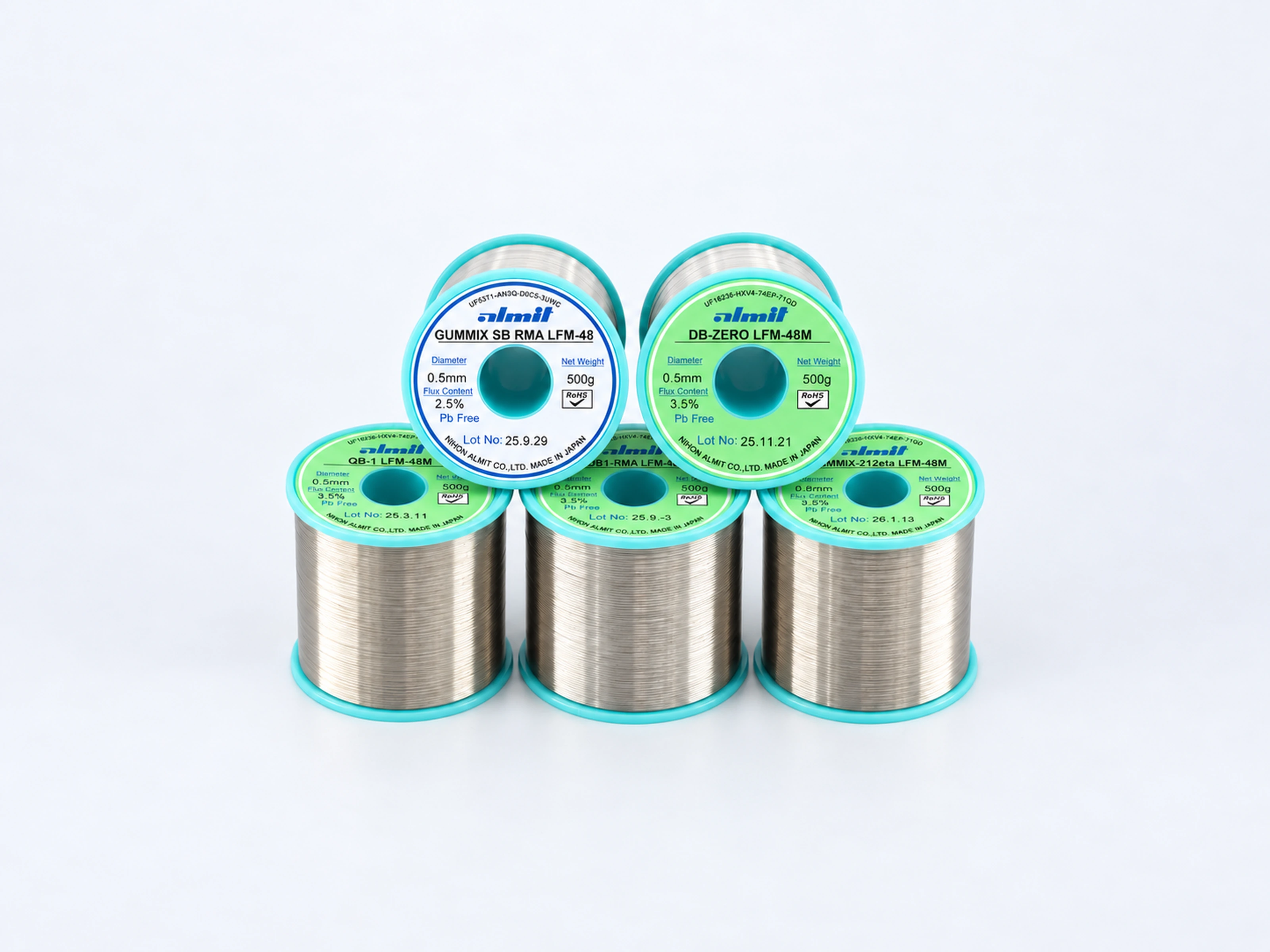
Rapid wetting even on difficult surfaces, minimal flux spatter and therefore less rework. The LFM-23 S also offers up to five times longer soldering tip lifetime, whilst the Gummix features a high-performance flux, the residues of which do not detach or crack.
-
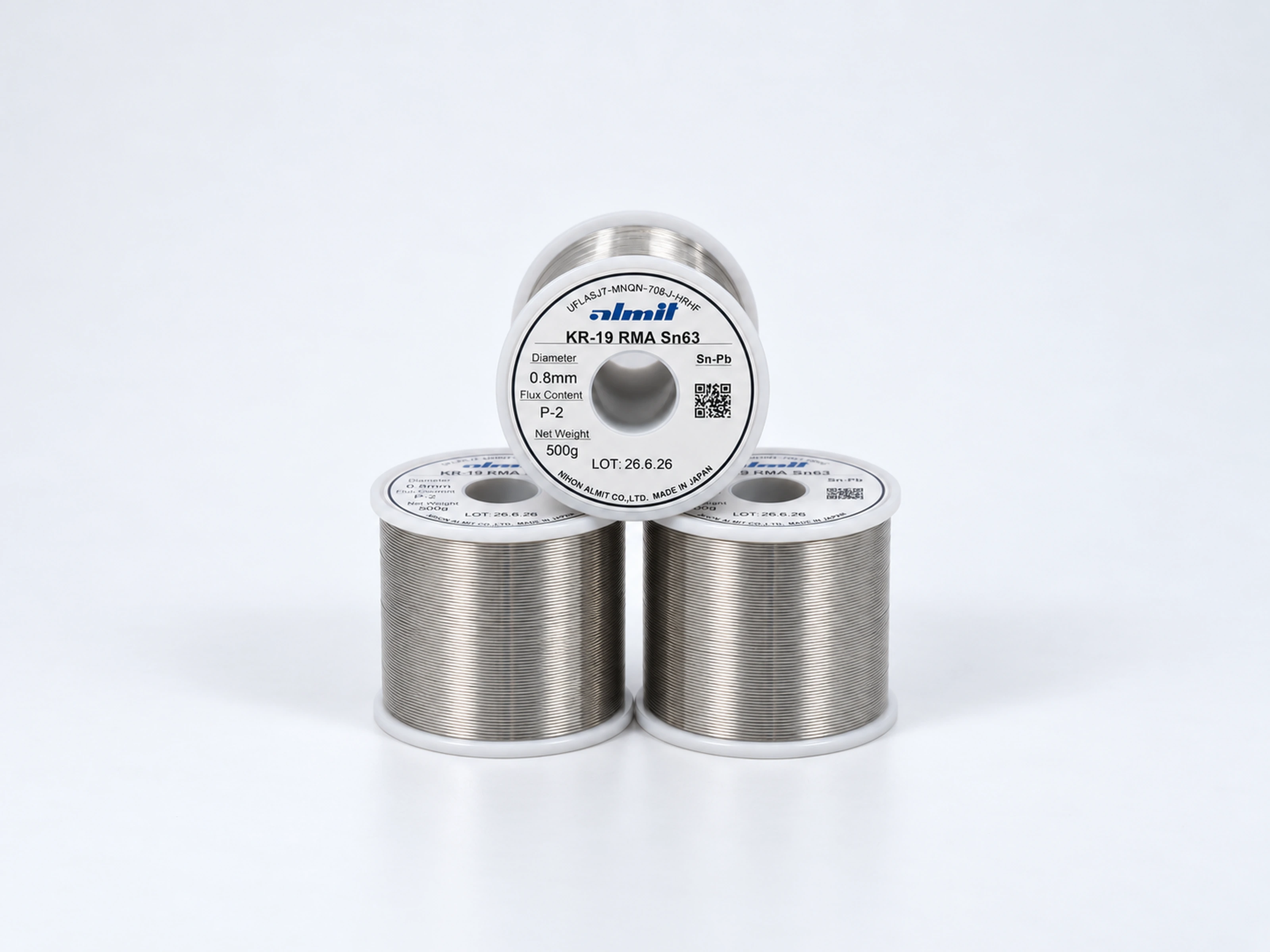
Tried-and-tested classics for the most demanding requirements: Alloys such as Sn60 and Sn62 offer reliable soldering performance and excellent process reliability, proven in decades of industrial use. Approved for aerospace and defence applications – epitomised by the KR-19, which was approved in 1982 for the NASA Space Shuttle project.
The solder wire classification overview shows which flux is suitable for which alloy and which soldering process – broken down into lead-free and leaded wires, each classified in accordance with J-STD-004.