
History
Nihon Almit
Nihon Almit was founded in Japan in 1956 and is one of the pioneers in the development and manufacture of solders. The company’s rapid and steady growth was underpinned by several outstanding inventions, such as solders for aluminium and a solder for joining nickel-chromium wires to bimetals.
Development
Almit’s first major project was the invention of the first solder for aluminium soldering in 1956. It proved a great success, as it was used – amongst other projects – for the Japanese high-speed ‘Shinkansen’ train. In 1982, Almit literally reached for the stars: the KR-19 solder wire went into space as part of NASA’s Space Shuttles – an international breakthrough for Almit. In 1984, a further development centre was established in the town of Akiruno, enabling the company to produce outstanding specialist solders at a time of rapid growth in the electronics industry. In 1985, the company received an award at the ‘10th Invention Grand Prix’ for its achievements in product development and was also honoured with the ‘Distinguished Service Award’ from the Tokyo Metropolitan Government.
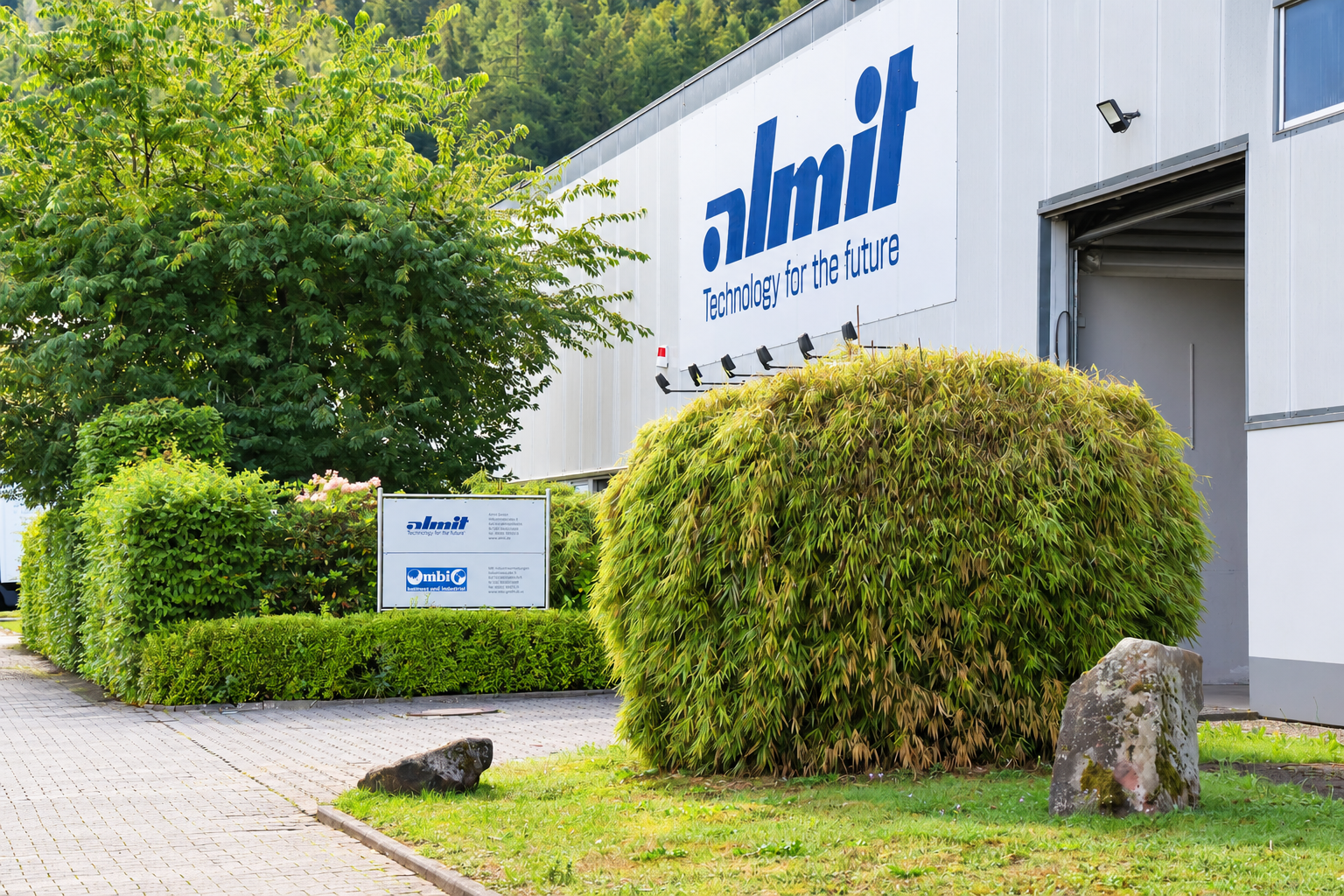
From 1956 to the present day
Seventeen milestones from the company’s foundation in Japan to its current site in Michelstadt.
-
1956
The company was founded and immediately achieved success with the practical application of aluminium solder.
-
1958
Aluminium solder is selected by the Ministry of Science and Technology as one of the ‘11 remarkable inventions’.
-
1967
Construction of a factory and laboratory in Chofu City
-
1976
A world first: the chlorine-free, highly efficient KR-19 resin-core solder is developed.
-
1982
Nihon Almit’s KR-19RMA solder is used by NASA on a space shuttle.
-
1984
The first research laboratory is opened in Akiruno-shi, Tokyo.
-
1991
Capital investments rise to 50,000,000 yen.
-
1992
Micro Joint Laboratories are established in Akiruno-shi.
-
1995
A new company building in Yayoi-cho, Nakano-ku is completed.
-
1999
A production technology centre is established in Uenohara, Yamanashi-ku.
-
2000
Almit GmbH is founded near Stuttgart, Germany.
-
2001
Production Technology Centre No. 2 and the production management building are completed. Nihon Almit (along with all company headquarters) is awarded ISO 9001 certification for quality management systems.
-
2003
Nihon Almit and the Micro Joint laboratories are certified to the ISO 14001 standard for environmental management systems.
-
2004
Almit Shanghai is established.
-
2005
Michael Mendel, now in charge of managing Almit GmbH in Germany, relocates with the company to Vielbrunn.
-
2008
Almit Thailand is founded.
-
2014
Almit GmbH moves to a new industrial estate in Michelstadt, near Frankfurt, and opens a new logistics and administration building covering over 1,000 m².
German-Japanese collaboration
Almit GmbH in Michelstadt is part of Nihon Almit in Japan. Whatever is developed there in research and development is tested and processed by Almit in Germany – and conversely, the requirements of European customers are fed back to Japan. Just how closely interlinked these processes are is demonstrated by this interview from the Almit customer magazine.

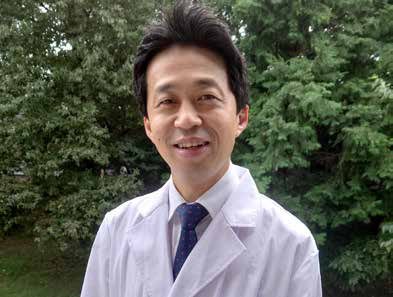
It is the pioneering spirit that drives us at Almit to conduct research anew every day and to develop innovative, forward-looking solutions.
Solutions that meet the individual wishes and needs of our customers and keep pace with rapidly evolving technology. We are delighted that Mr Takeo Igarashi, Head of Research and Development for solder wire at our parent company in Japan, has given us an interview on Almit’s quality standards, and we would like to express our sincere thanks to him.
-
1. Please briefly introduce yourself and describe your role at Almit.
My name is Mr Takeo Igarashi and I am Head of the Solder Wire Research and Development Department.
-
2. What is your favourite product from the Almit product portfolio?
My favourite product ranges are the S-Line and the M-Line, which feature solder wires with special alloys designed to prevent tip wear. I developed these solder wires.
-
3. How does Almit define its quality standards?
Almit adheres to JIS (Japan Industrial Standard) and IPC standards. In addition, we have developed a special, even stricter internal assessment method.
-
4. How are the quality requirements determined?
Customer satisfaction is our top priority. We tailor the quality requirements and specifications of new products to our customers’ needs. These are communicated to us by our sales teams, who meet with customers on site.
-
5. Please describe the quality control process.
Every process is strictly monitored. We begin with an incoming goods inspection, carry out several minor quality checks and inspections during the production process, and conclude with a final inspection. If we find a fault at any stage, the products are not passed on to the next stage of the process.
-
6. Why is a step-by-step quality control process of such great importance to Almit’s product portfolio?
This micro-scale control process is the most important factor in maintaining the quality of our products. Only with the best products can our customers deliver the best performance. Nothing is more important to us.
-
7. Who carries out quality assurance? What training and skills must a quality inspector have if they wish to work at Almit?
The Quality Assurance department is responsible for this. Our staff receive regular in-house training and take part in external seminars and further training programmes. Above all, we are looking for people who constantly strive to improve the status quo. This applies to all departments at Almit. Only in this way can we guarantee progress and innovation.
-
8. How is product safety ensured?
Our Quality Assurance department maintains a traceability system for our products. We retain samples of wire and paste alloys, as well as flux samples, for ten years. This ensures we are fully prepared to address any traceability issues.
-
9. How does Almit’s quality control stand out from the competition?
What sets us apart from others is definitely the exceptionally high reliability of the solder joints. That is what defines Almit quality.
-
10. What does innovation mean to Almit?
Just as we developed the world’s first aluminium solder, we always strive to develop something that has never existed before.
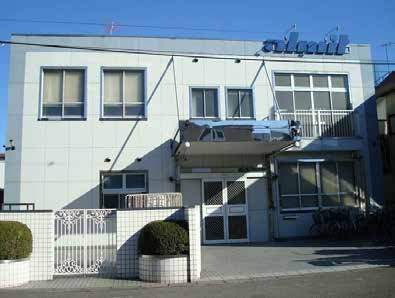
From the Almit customer magazine ‘Wire & Paste’, Interview ‘Quality must come first’ with Takeo Igarashi, Almit Japan. The article was published in two languages; this is a translation of the German version.
Would you like to work with us?
Seventy years of solder, four production sites and a contact person near you.