
Solder paste
Lead-free and leaded solder paste
From the print image to the solder joint
Solder paste is printed or dispensed and then melted – this entire process determines the final appearance of the solder joint. Almit develops lead-free and leaded pastes in several flux classes and grain sizes, tailored to stencil printing, jet printing, reflow and contactless soldering. Which paste is suitable depends on the application method and the melting process.
-
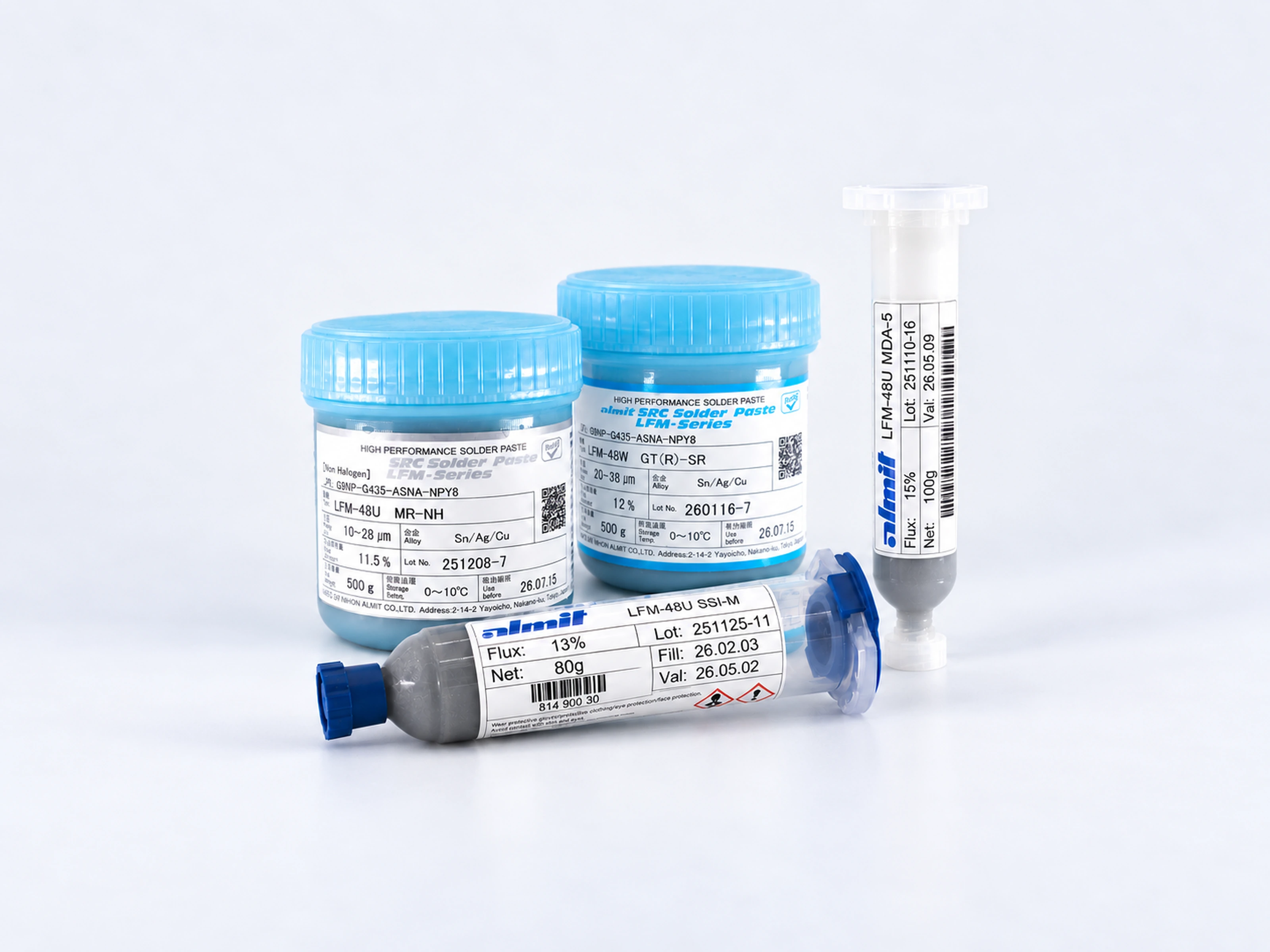
Consistent print images over long periods on the stencil, clean and shiny solder joints without mid-chip balling. MR-NH still releases cleanly even at an area ratio below 0.6, whilst NH-GE minimises graping. In addition, halogen-free formulations as well as dedicated pastes for jet printing and contactless soldering, all RoHS and REACH compliant.
-
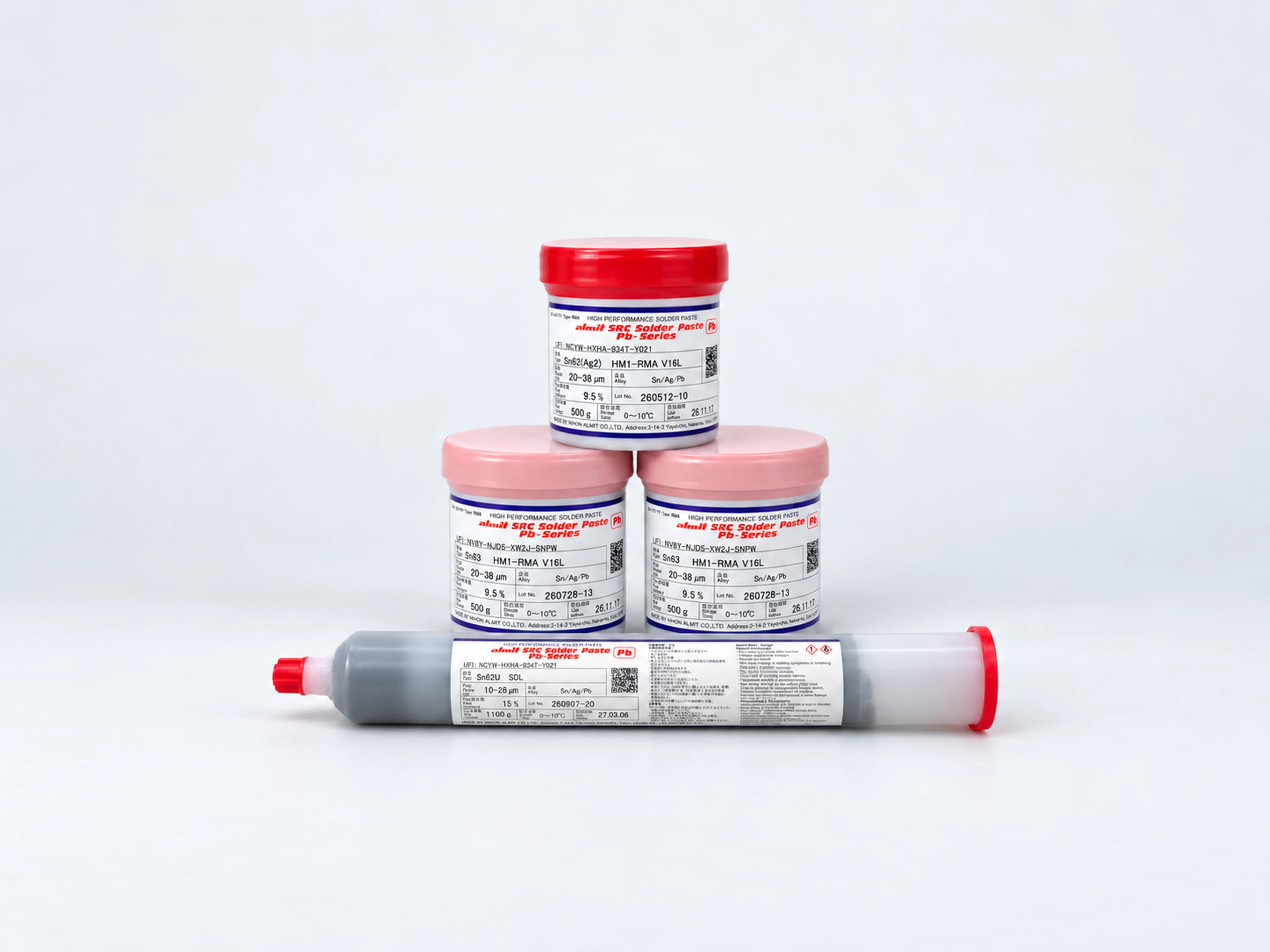
For applications exempt from the RoHS Directive – such as in aerospace, military electronics or medical technology. Outside these exemptions, lead-free solder paste is the standard. Six alloys from 171 °C, eutectic at 183 °C. Five fluxes, available across the range in Type 3 (25–45 µm) and Type 4 (20–38 µm).
The classification shows which flux has which classification and which alloy it is suitable for – in separate tables for lead-free and leaded solder paste.