
Wave soldering (solder bath / selective)
In wave soldering, the printed circuit board is passed over a wave of liquid solder, whilst in selective soldering using a mini-wave, only individual solder joints are processed. Both processes are mass soldering methods – it is estimated that over 98 % of all solder joints worldwide are produced using wave or reflow soldering. The solder in the bath is key to process stability: its metallic purity determines how much dross is produced and how long the bath lasts. Almit supplies premium-quality solder bars and solid wires for wave, splash and selective soldering systems.
In wave soldering, the printed circuit board is passed over a wave of liquid solder, whilst in selective soldering using a mini-wave, only individual solder joints are processed. Both processes are classified as mass soldering processes – it is estimated that over 98 % of all solder joints worldwide are produced using wave or reflow soldering. Process stability is determined by the solder in the bath: its metallic purity determines how much dross is produced and how long the bath lasts. Almit supplies premium-quality solder bars and solid wires for wave, splash and selective soldering systems.
Wave soldering, splash soldering and selective soldering
It is estimated that over 98 % of all solder joints are produced using mass soldering processes such as wave or reflow soldering. The remaining solder joints must be soldered individually, point by point, due to design constraints.
Related variants from the soldering glossary: In jet wave soldering, the wave is shaped to form a hollow profile. In drag soldering, the assembly is slowly pulled through the solder. For single-point soldering without a solder bath, see laser soldering / induction.
Almit bestsellers for wave and selective soldering
These are the two Almit alloys with their own product pages, which are designed for wave, splash and selective soldering systems. The full range of solder bars and solid wire is listed below.
-
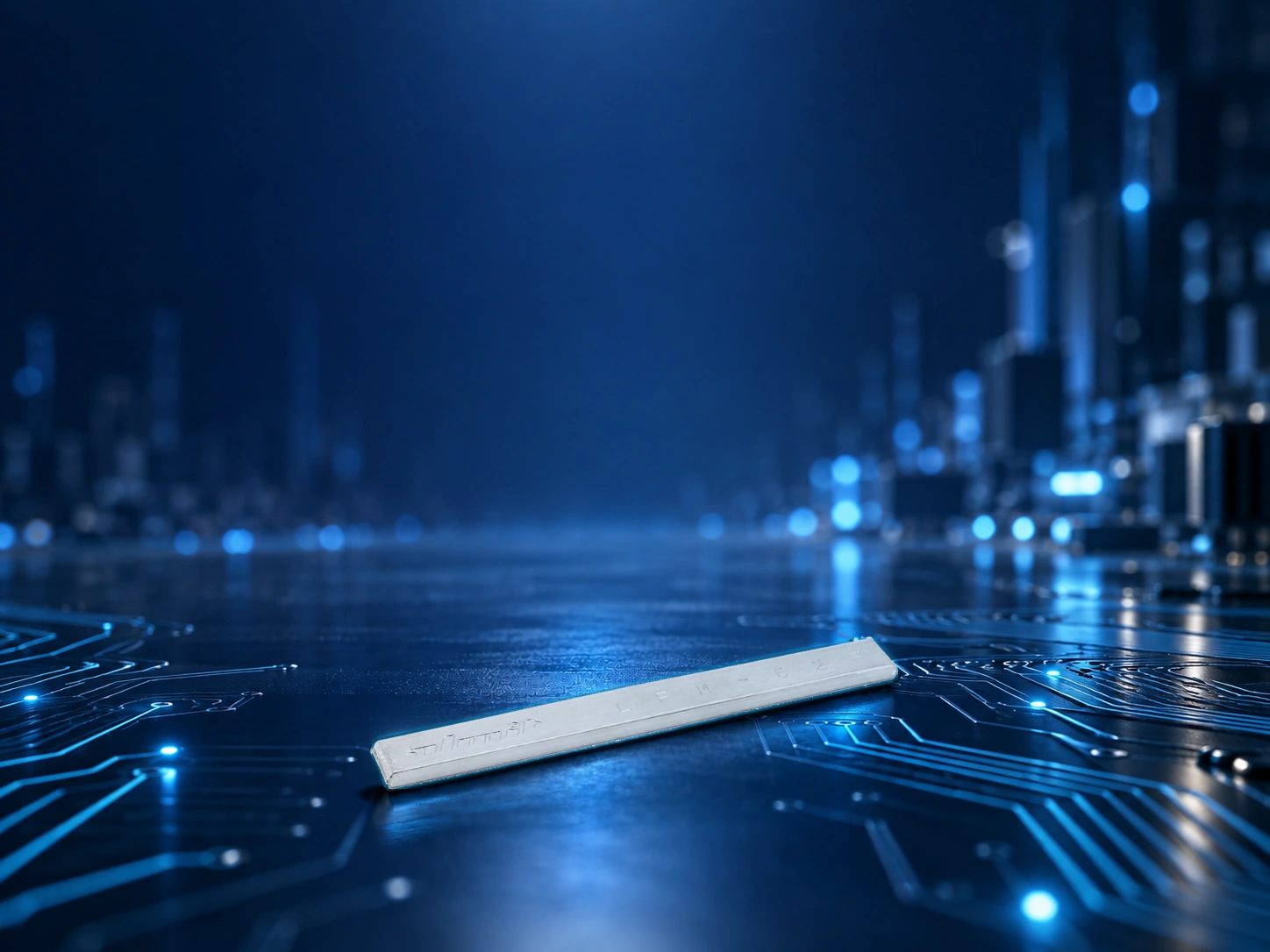 Eutectic tin-copper, silver-free
LFM-22H
The eutectic SnCu alloy Sn-0.7Cu melts at 227 °C and is designed for wave, flood and selective soldering systems.
Find out more
-
 The 3-metal alloy against copper leaching
LFM-62
In a dip-soldering comparison at 400 °C, 83.4 % of the copper wire remained intact – compared with 27.3 % for SAC305.
Find out more
Why metal purity determines bath life
Solder dross refers to the oxides of tin and lead produced when the solder melts. The term encompasses not only the oxidised metal dispersed throughout the melt, but also deposits at the bottom of the bath.
Dross is unavoidable, but its formation can be controlled
Almit solder bars and solid wires are manufactured to a high standard of metal purity – this ensures minimal dross formation, consistent wave performance and long bath life.
- less material loss
- less maintenance
- more consistent soldering results throughout the shift
Soldering oil as a supplement
In addition, the soldering encyclopaedia defines ‘soldering oil’ as oil added to the solder bath to protect the surface of the solder from oxidation or to reduce its surface tension, thereby improving its flow.
Copper leaching – the underestimated bath problem
During soldering, copper is leached from pads and lead wires into the solder. In the wave soldering bath, this copper accumulates over time and alters the bath composition; on the assembly itself, this leached copper can corrode fine traces and connections.
LFM-41
An increased copper content minimises copper leaching, protecting pads and fine lead wires.
- Composition
- Sn-0.3Ag-2.0Cu
- Temperature
- 217–270 °C
LFM-59
High copper content, silver-free.
- Composition
- Sn-3.0Cu
- Temperature
- 227–312 °C
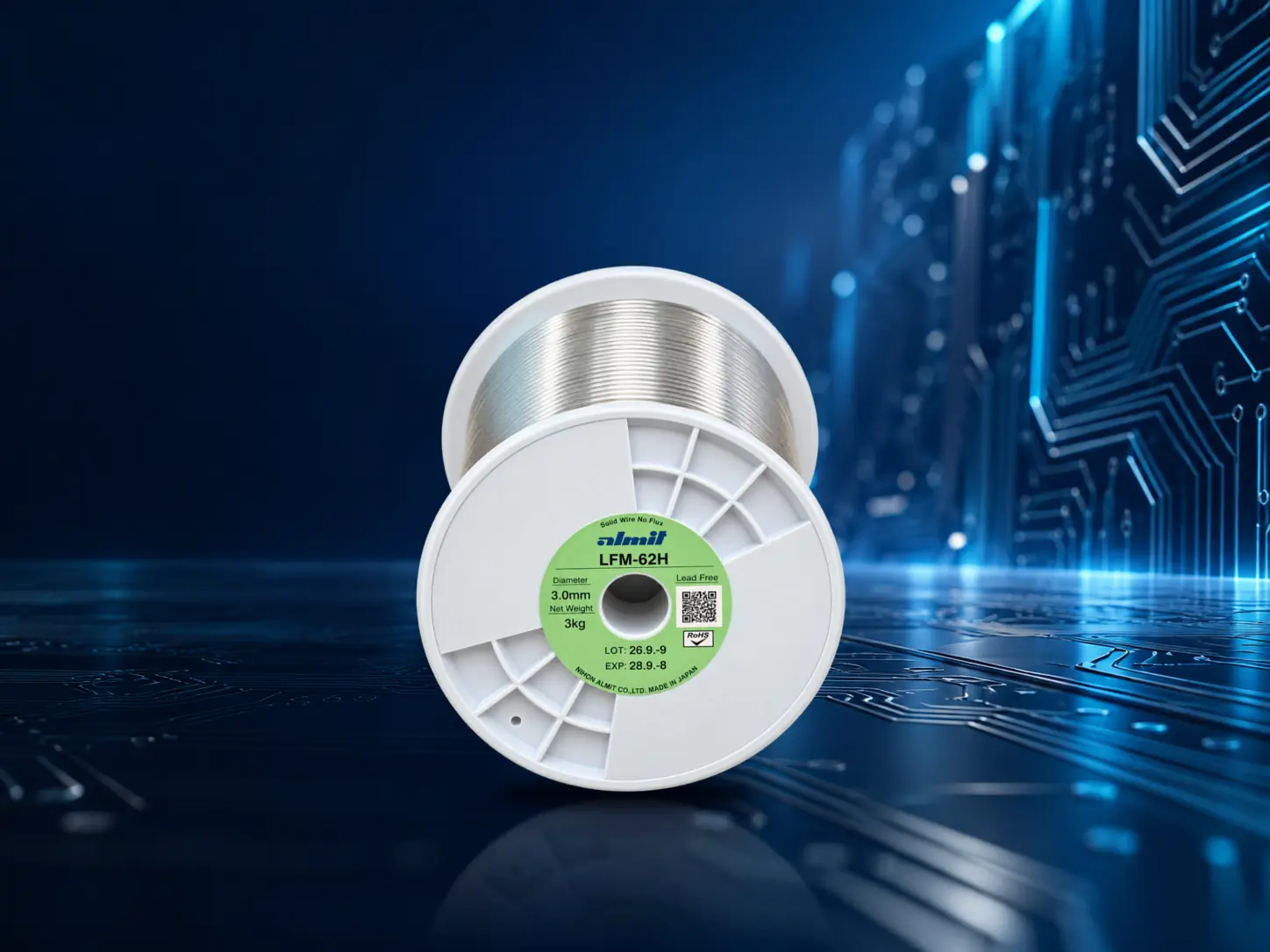
LFM-62H
Copper-rich SnCuNi alloy, silver-free.
- Composition
- Sn-3.0Cu-0.5Ni
- Temperature
- 228–394 °C
Almit solders for wave, splash and selective soldering systems
| Alloy | Composition | Temperature | Positioning |
|---|---|---|---|
| LFM-48 (SAC305) | Sn-3.0Ag-0.5Cu | 217–220 °C | Industry standard, globally qualified and universally applicable |
| LFM-22 | Sn-0.7Cu | 227 °C | Silver-free and eutectic – the cost-effective standard solution |
| LFM-23 | Sn-0.6Cu-0.05Ni | 228 °C | Silver-free SnCuNi alloy, significantly reduced material costs |
| LFM-86 (SAC0307) | Sn-0.3Ag-0.7Cu | 217–228 °C | Low-silver, cost-optimised SAC alternative |
| LFM-62H | Sn-3.0Cu-0.5Ni | 228–394 °C | Anti-copper leaching, silver-free |
| LFM-59 | Sn-3.0Cu | 227–312 °C | Anti-copper leaching, silver-free |
| LFM-82 (SAC396) | Sn-3.9Ag-0.6Cu | 217–218 °C | Increased silver content for robust, fatigue-resistant solder joints |
| LFM-34 | Sn-3.5Ag | 221 °C | Eutectic SnAg alloy, high joint strength |
Solid wires
Solid wires without a flux core are used for solder bath replenishment and processes with separate flux. Available, amongst others, in:
- SJM-03 Sn-0.3Ag-0.7Cu-2.0Bi · 210–226 °C · low-silver and high long-term reliability
- LFM-41 Anti-copper leaching
- LFM-22 and LFM-23 silver-free
- LFM-35 Sn-3.8Ag · 221 °C
High metal purity ensures clean, stable soldering processes. Continue to solder bars and solid wire, solder bar classification, silver-free / low-silver and the alloy table.
Making good use of solder waste
Solder scrap does not consist solely of tin – it also contains other components such as copper or silver. During recycling, the material is reused directly as rods, ingots or wire, provided the purity allows it; otherwise, further refining steps are carried out to recover pure tin, which then serves as the raw material for new solder.
| SAC305 | SN100 | Sn63Pb37 | |
|---|---|---|---|
| CO₂e savings | 20,206.03 | 12,936.91 | 8,317.09 |
MTM Ruhrzinn provides comprehensive documentation, from confirmation of goods receipt through material analyses to proof of recycling and the issuance of a CO₂ certificate.
The figures are provided by our partner and are based on a CO₂ price of €60 per tonne. We have deliberately included only the kg figures, not the resulting euro amounts – the CO₂ price is volatile.
Wave soldering and selective soldering – a brief answer
What is the difference between wave soldering and selective soldering?
In wave soldering, the entire underside of the printed circuit board is passed over a solder wave. In selective soldering with a mini-wave, the solder joint is specifically heated and wetted by liquid solder from a customised nozzle – meaning only individual points are soldered.
What is solder dross?
Solder dross refers to the oxides of tin and lead formed when the solder melts. The term covers both the oxidised metal distributed throughout the melt and deposits on the bottom.
How can I reduce dross formation in the solder bath?
The key factor is the metal purity of the solder used. Almit solder bars are manufactured to a high standard of metal purity, which ensures low dross formation, stable wave performance and long bath life.
Which alloy protects against copper leaching?
Copper-rich alloys. LFM-41 (Sn-0.3Ag-2.0Cu), LFM-59 (Sn-3.0Cu) and LFM-62H (Sn-3.0Cu-0.5Ni) minimise copper leaching and protect pads and fine connecting wires.
Are there any silver-free solder bars?
Yes. LFM-22 (Sn-0.7Cu, eutectic, 227 °C) is the silver-free standard solution, whilst LFM-23 (Sn-0.6Cu-0.05Ni, 228 °C) is the silver-free SnCuNi variant with significantly reduced material costs.
What is solid wire without a flux core used for?
For maintaining the solder bath level and for processes in which the flux is applied separately – for example, via a foam fluxer.
What happens to the solder waste from the bath?
It can be recycled. If the purity is sufficient, the material is reused directly as rods, ingots or wire; otherwise, refining steps are carried out to recover pure tin.
Which alloy is suitable for your bath?
The copper content of the assembly, bath temperature, bath life requirements and material costs determine the choice. Speak to your Almit specialist adviser.