
Repair / Rework
In repair and rework, an assembly that has already been soldered is reworked in specific areas – a component is replaced, a solder joint is re-soldered, or a BGA is repositioned. Unlike in mass production, there is no stencil and no reflow profile to handle the activation. The flux bears full responsibility for ensuring proper wetting. Almit offers dispensable gels and liquid systems in the L0, L1 and M1 classes for this purpose – all as no-clean formulations with minimal, non-corrosive residues.
During repair and rework, an assembly that has already been soldered is reworked in specific areas – a component is replaced, a solder joint is re-soldered, or a BGA is repositioned. Unlike in mass production, there is no stencil and no reflow profile to handle the activation. The entire responsibility for proper wetting lies with the flux. Almit offers dispensable gels and liquid systems in classes L0, L1 and M1 – all as no-clean formulations with minimal, non-corrosive residues.
What makes rework special
Rework takes place under challenging conditions. The surfaces have already been subjected to thermal stress and oxidised; adjacent components must not be dislodged, and the process is rarely automated. Three factors determine the choice.
- Application method A gel remains where it is applied and can be placed with pinpoint accuracy using a dispenser – a prerequisite for BGA and flip-chip work. A liquid, alcohol-based flux dries quickly and can be applied over larger areas using a pen or brush.
- Degree of activation On difficult, tarnished or unusual surfaces, an L0 formulation is not always sufficient. Almit therefore also offers the same base in higher-activity variants.
- Residues All the systems mentioned are no-clean formulations. With RMA-type fluxes, cleaning is not required. Where cleaning is nevertheless carried out, the combination of contamination and cleaning chemicals is crucial.
Almit’s best-sellers for repair and rework
The Almit application overview lists these five products for repair and rework.
-
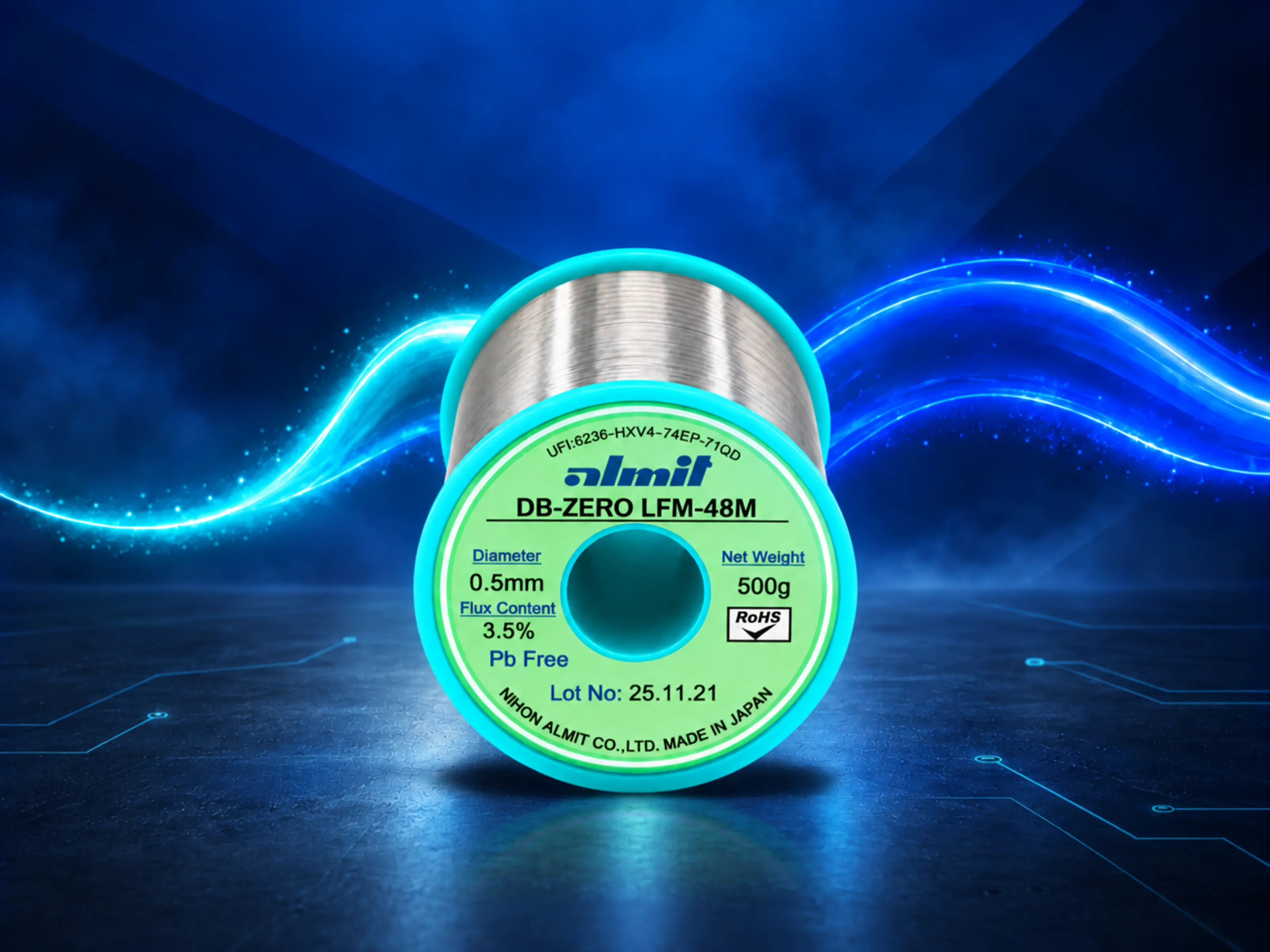 Dual boost for unique wetting
Dual-Boost series
DB-1 RMA combines a fast-acting activator with a long-lasting one – the solder flows immediately into the plated-through hole.
Find out more
-
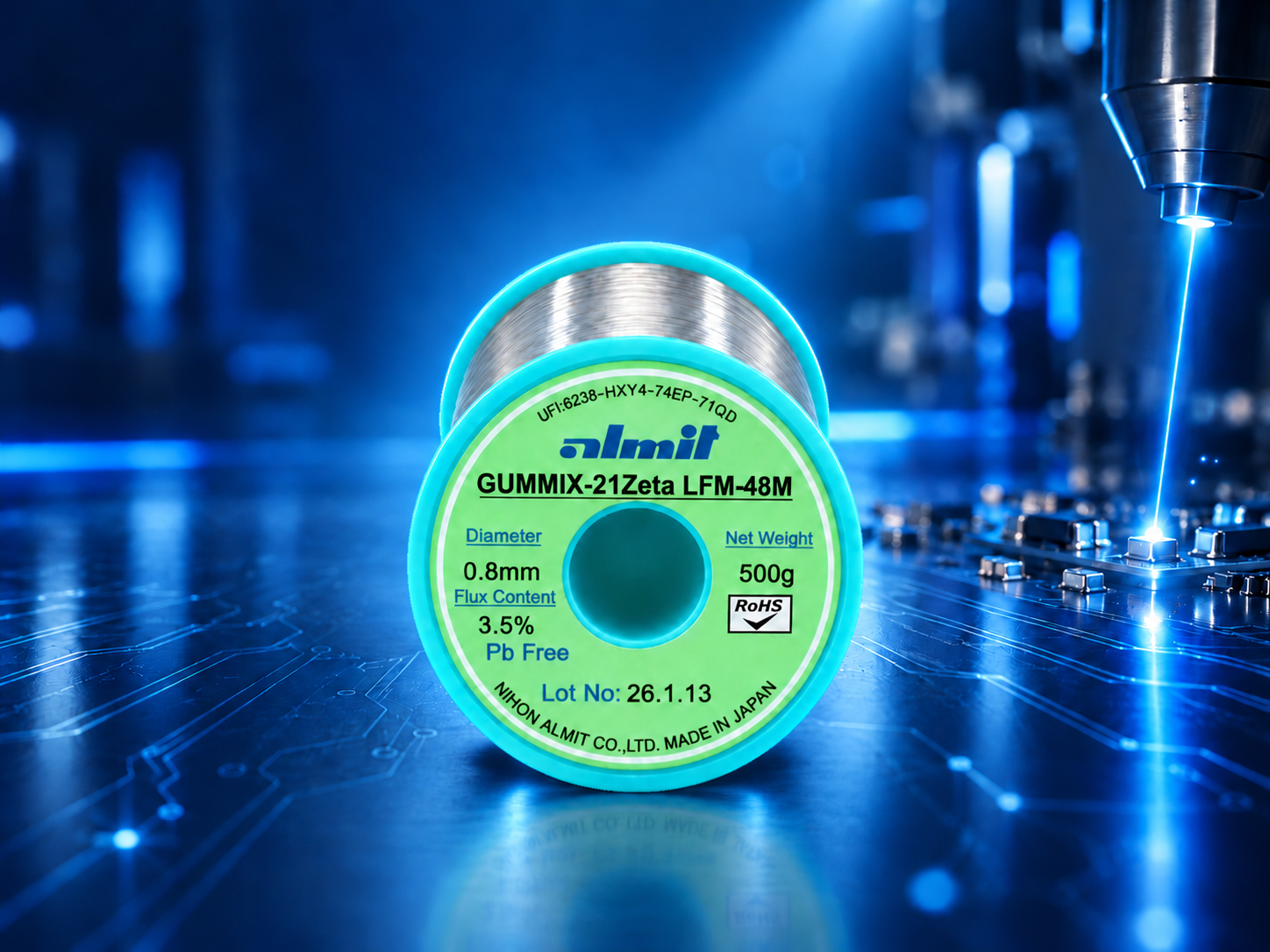 Top sellers for good reason
GUMMIX series
No detachment of flux residues, no cracking and only minimal flux spatter.
Find out more
-
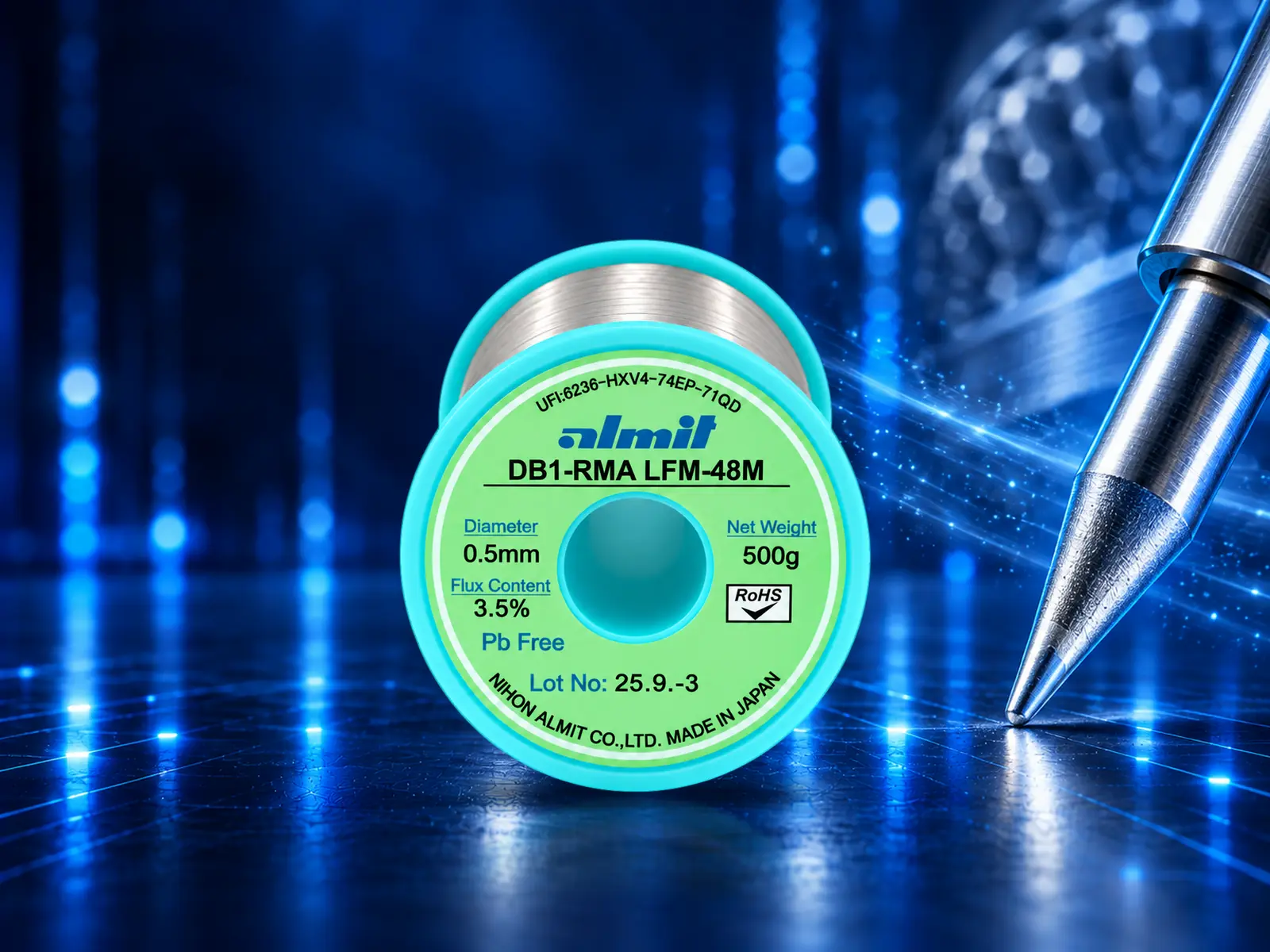 Life insurance for soldering tips
S+M Line
The patented micro-alloy minimises iron erosion from the soldering tip, whilst the M-line also minimises oxidation.
Find out more
-
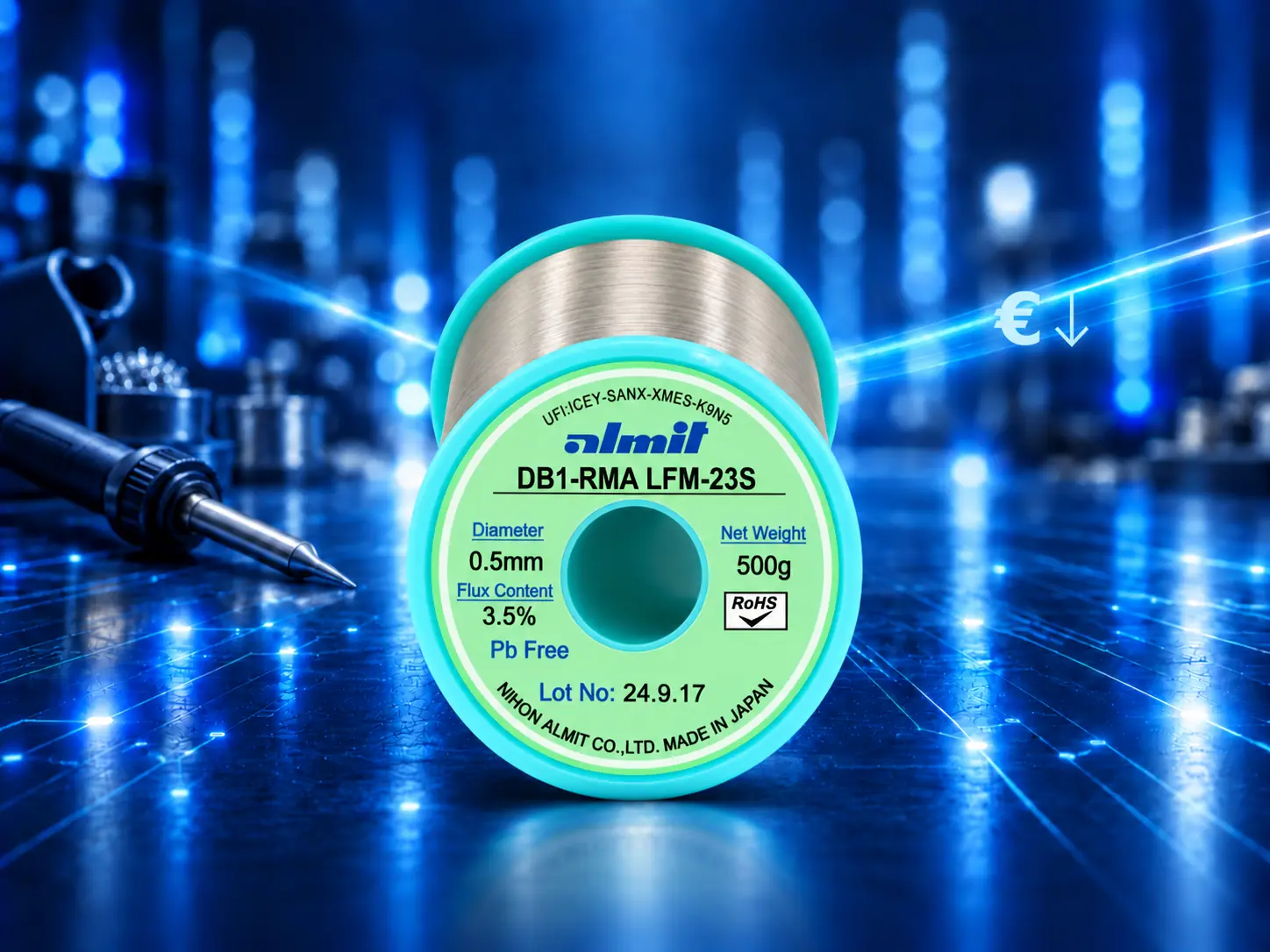 Eutectic solder, 0 % silver content
LFM-23 S
The silver-free SnCuNi alloy, eutectic at 228 °C – regardless of the price of silver.
Find out more
-
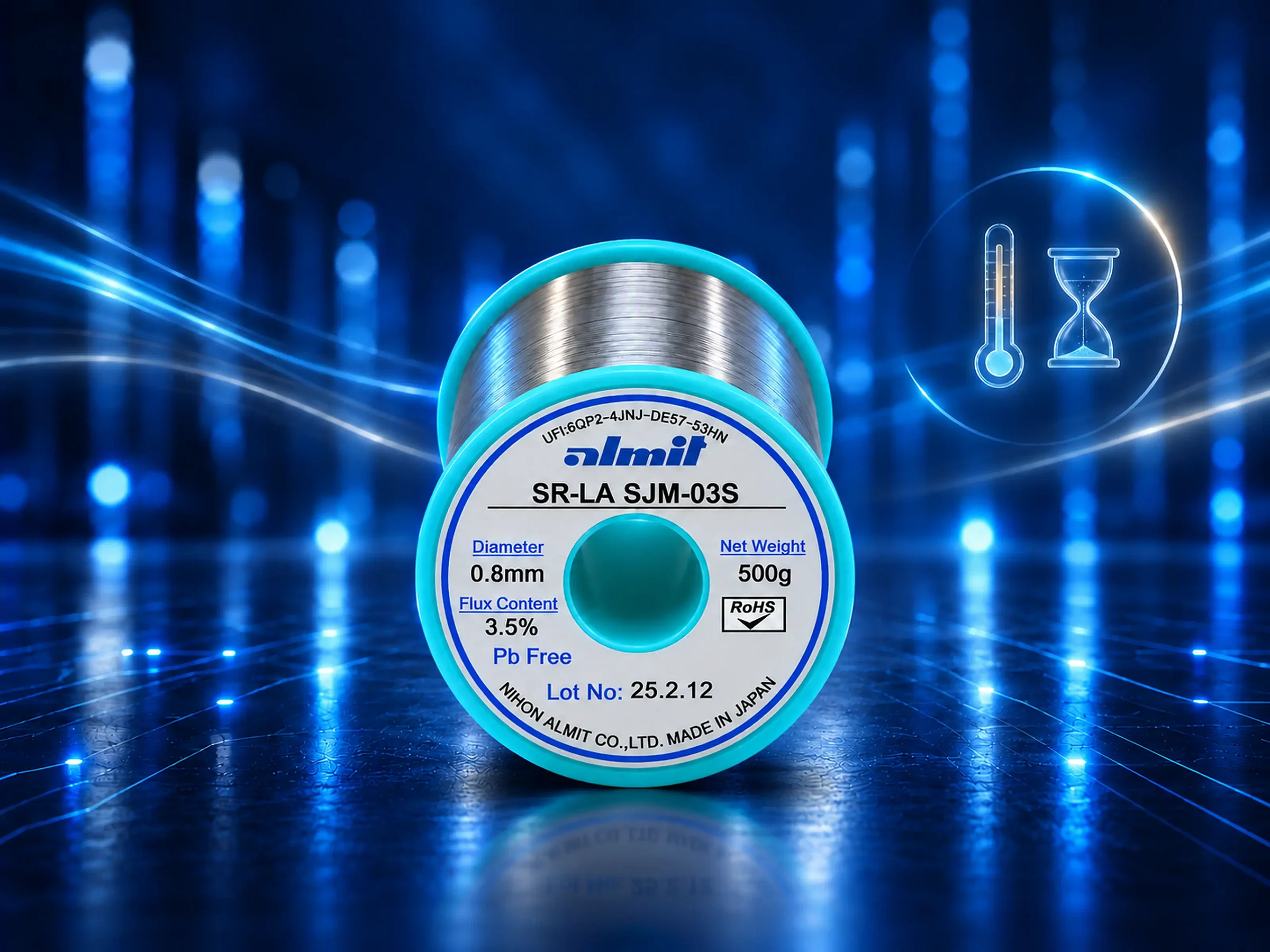 Lead-free with excellent strength
SJM series
SJM-40 shows no cracking even after 2,000 thermal cycles; the silver content can be selected from 0.3 to 4 %.
Find out more
Solids content – how much active substance remains
The higher the solids content, the more active substance remains at the solder joint after drying. At 60 %, the BM-1 RMA gel is significantly higher than liquid systems – which is precisely why it remains at the BGA exactly where it belongs.
| BM-1 RMA | BM-5000 RMA | RF-20A | RC-15 SH RMA | RC-281 PF | |
|---|---|---|---|---|---|
| Solids content | 60 | 27 | 20 | 12 | 12 |
Almit flux for repairs and rework
Dispensable gels
BM-1 RMA
‘No-clean’ flux gel, ideal for BGA and flip-chip assembly as well as rework. Applied via stencil or dispenser, either by machine or manually.
- Solids content
- 60 %
- Relative density
- 1.081
- Cartridges
- 5 / 10 / 30 ccm
BM-1 AH
A more highly activated variant of BM-1 for demanding rework tasks on difficult surfaces.
- Solids content
- Not specified
BM-1-B50
Blue-coloured BM-1 variant: The application remains visually verifiable at all times.
- Solids content
- Not specified
Liquid fluxes
| Product | Class | Solid | Special feature |
|---|---|---|---|
| RC-15 SH RMA | L1 | 12 % | The versatile liquid for repairs and re-soldering. RMA type with clear, non-corrosive residues. Apply using a flux pen or brush |
| RC-281 PF | M1 | 12 % | Alcohol-based, fast-drying, powerful M1 activation. Prevents bridging and icicles; can also be used for aluminium soldering |
| BM-5000 RMA | L1 | 27 % | High solids content for excellent soldering performance; ideal for BGA repair and rework. Apply with a pen or brush |
| RF-20A | M1 | 20 % | Alcohol-based M1 flux for repair and rework processes |
Packaging: The liquid systems are available as 8 ml pens, 15 ml, 250 ml and 1 litre bottles, as well as 5 litre and 20 litre canisters – from individual workstations to repair lines. All Almit fluxes are developed and manufactured in-house and are designed for solder wires and solder pastes produced by the company – easy to use, highly effective and without crystallisation. For classification, see Flux Classification.
For the rework workstation
- Desoldering braid Sizes tailored to the application enable immediate and precise removal of solder. Processing and repair times are significantly reduced, and the risk of heat damage to the printed circuit board is minimised. Available from 0.8 mm to 5.6 mm, as 30-metre rolls and in PermaPak packs of 10 and 25 spools.
- Soldering Tip Cleaner The Almit Soldering Tip Activator is a mixture of lead-free solder powder and flux. It cleans and protects the soldering tip both during hand soldering and in robotic applications. Pack size: 40 g.
- Flux remover Powerful Flux-Off cleaners for flux residues, suitable for lead-free and leaded solder joints. Available in 200 ml in the variants water-soluble, resin and lead-free.
Fine solder wires for rework are listed under use in iron soldering.
Cleaning after rework
Of soldered assemblies, around 20 % are cleaned – particularly in demanding applications such as the automotive sector, where moisture and extreme temperature fluctuations occur, or in the aerospace and medical technology sectors, where particularly high reliability requirements apply.
It is not the system that is crucial, but the combination
If the wrong cleaning chemistry is chosen for a given type of contamination, even the best cleaning system will be unable to remove it. Modern solder pastes contain different types of rosin or synthetic resins, various activators and thixotropic agents, each of which requires a tailored chemical formulation to dissolve them. Even so-called ‘no-clean’ pastes, which are actually intended to remain on the assembly, can be cleaned using specific agents.
-
1
Cleaning
The cleaning agent must be suited to the specific type of contamination – not the other way round.
-
2
Rinsing
Usually two to four rinse cycles with fully demineralised water completely remove any cleaning agent residues from the assembly.
-
3
Drying
Every step is equally important – incorrectly selected parameters for individual steps can have consequences just as serious as production without any cleaning at all.
Almit and ZESTRON work closely together to conduct trials with newly developed formulations and jointly maintain a ‘Process Recommendation Sheet’ to enable them to offer customers suitable combinations of pastes, solder wires, tacky fluxes and cleaners. More in the expert report ‘Cleaning PCBs Correctly’.
Repair and rework – quick answers
Which flux is suitable for BGA rework?
BM-1 RMA is a ‘no-clean’ flux gel with 60 % solids content, ideal for BGA and flip-chip assembly as well as rework. It can be applied using a stencil or dispenser, either by machine or manually. BM-5000 RMA is the liquid alternative with a 27 % solids content.
What is the difference between BM-1 RMA and BM-1 AH?
Both are flux gels based on the same formulation. BM-1 RMA is classified as L0 and is 100 % halogen-free. BM-1 AH is the higher-activity L1 variant for demanding rework tasks on difficult surfaces.
Is there a coloured flux available for application monitoring?
Yes. BM-1-B50 is the blue-coloured variant of BM-1 – the application can be visually monitored at all times.
Which flux prevents bridging and icicles?
RC-281 PF is a highly reliable flux that prevents bridging and icicles. It is alcohol-based, dries quickly and, as an M1 flux, can also be used for aluminium soldering.
Is cleaning required after soldering with no-clean fluxes?
With RMA-type fluxes, cleaning is not required. However, if residues are not removed, their surface insulation resistance must be tested at temperatures up to approximately 100 °C in a humid atmosphere, as even substances that are insulating at room temperature may lose their insulating properties when the solder joint heats up.
How do I remove solder during rework?
With desoldering braid. Sizes ranging from 0.8 mm to 5.6 mm, tailored to the application, enable immediate and precise removal of the solder and reduce the risk of heat damage to the printed circuit board.
What pack sizes are available for repair fluxes?
From 8 ml pens and 15 ml bottles, through 250 ml and 1 litre bottles, up to 5 and 20 litre canisters.
Which flux is right for your repair task?
The component type, surface and application method determine the choice. Please speak to your Almit specialist advisor.