
Remelting press-soldering
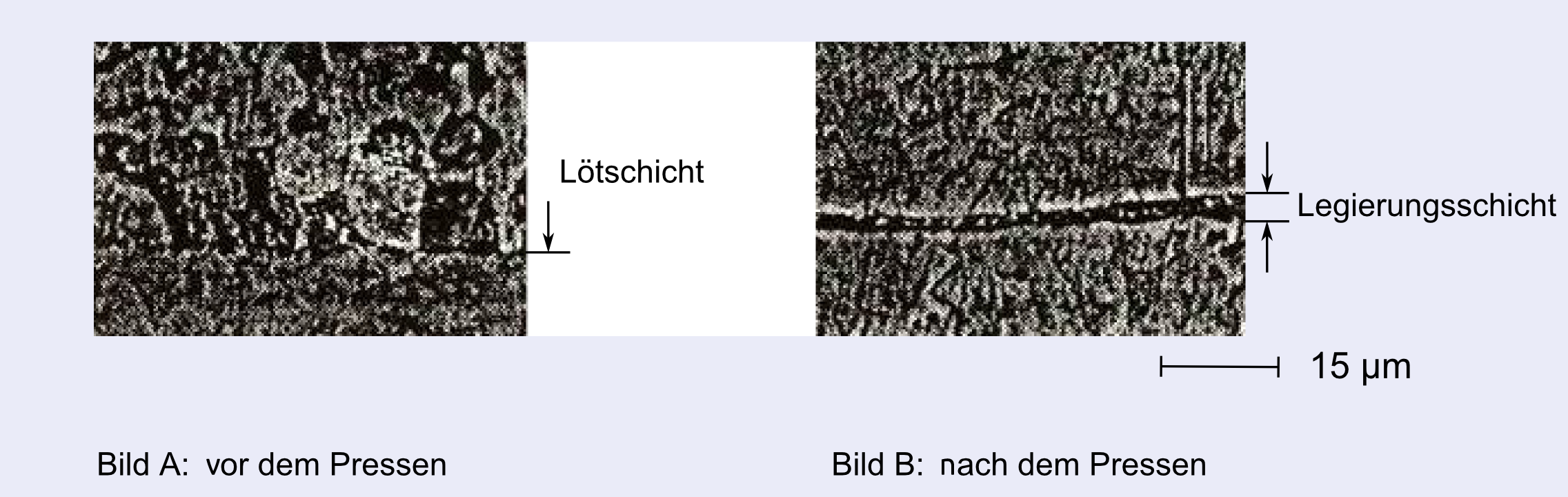
In this process, an alloy layer is first formed at the interface between the solder and the base material. This joint is then reheated and, as soon as the solder melts, compressed. The solder, with its low melting point and low strength, is forced out of the solder gap in its liquid state, and the alloyed layers bond directly with one another. Viewed under a microscope, this produces the following image:
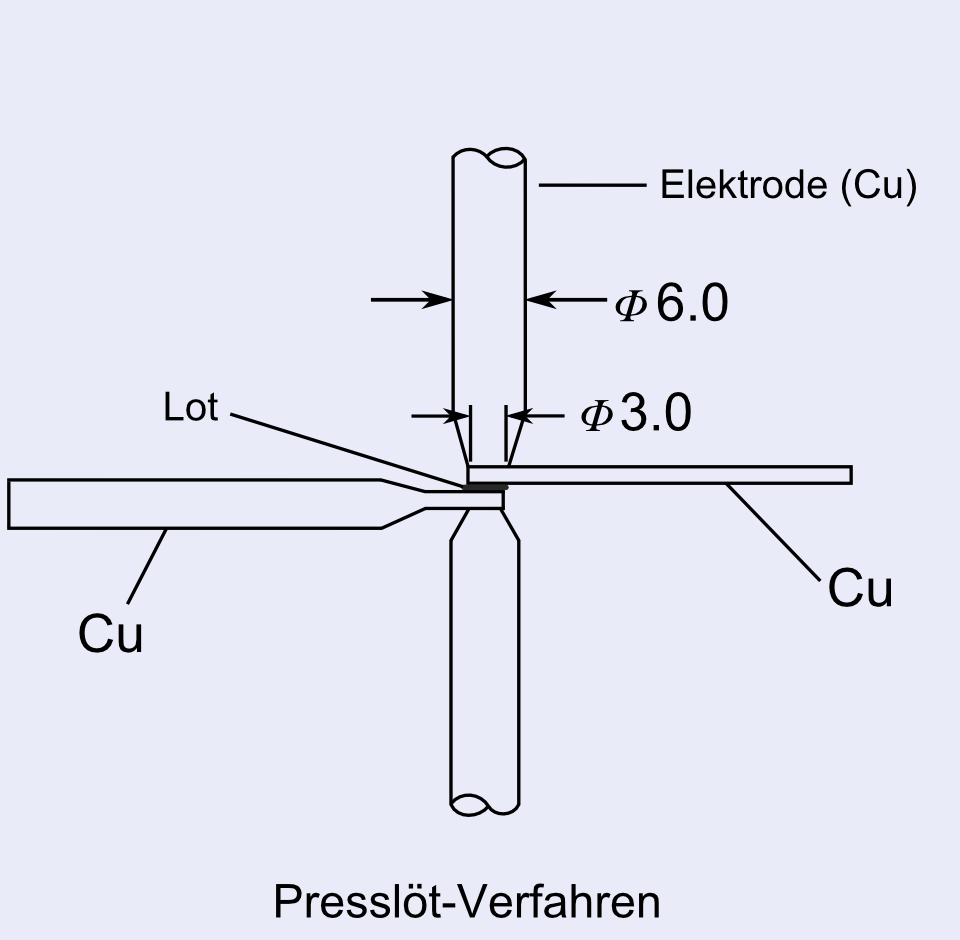
Figure A shows the state after soldering two parts. A considerable amount of solder is present at the joint. Figure B was taken after pressing at the solder’s melting temperature. Most of the solder has been pressed out of the gap and the parts are joined together with almost no solder layer. As the diagram illustrates, pressing can be combined with rapid heating of the components by means of electrical resistance. This topic is discussed in the following research paper: Hattori, Funamoto, Shida (Hitachi Ltd.), ‘Properties of Joints in Resistance-Heated Press Soldering’, Proceedings of the Japan Welding Society, Vol. 7 (1989), No. 3, pp. 348–351.