
Copper mirror test
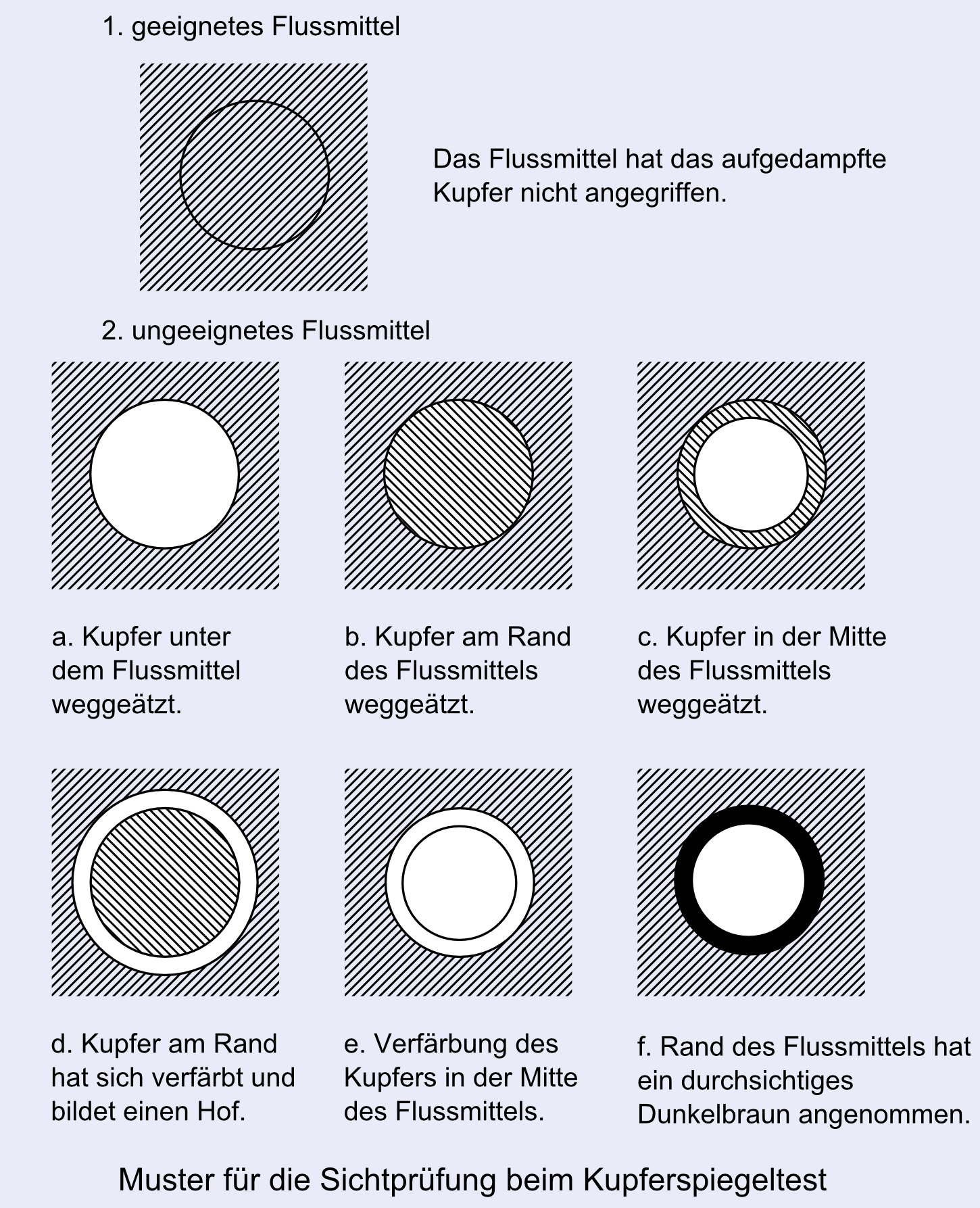
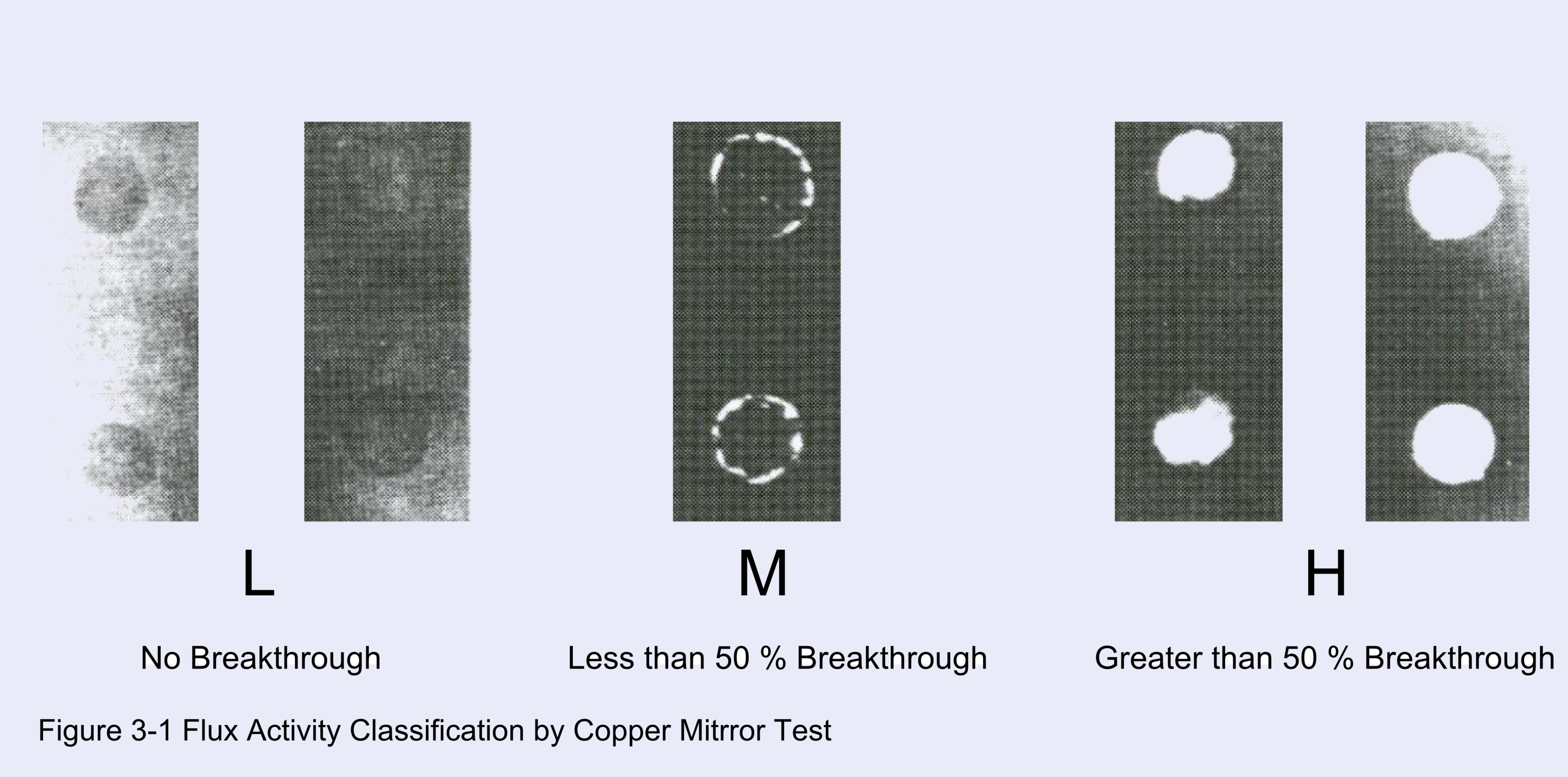
A widely used test method in accordance with JIS-Z-3197 (1986), Section 6.6.2. (IPC J STD 004 Test Method IPC TM 650 2.3.32), used to test the corrosive effect of fluxes for cored solders and solder paste, as well as liquid, solid and rosin-based fluxes, on a copper plate. For this test, a 1.0 × 25 × 76 mm glass microscope slide is cleaned and coated with a layer of copper, which should have a transmittance of 10 ± 5 % for visible light with a wavelength of 5000 Å. Flux for cored solder is dissolved in isopropyl alcohol (35 %) for testing. Subsequently, 0.05 ml of the solution is dripped onto the sample, which is then placed within 5 minutes into a container maintained at 23 ± 2 °C with a relative humidity of 45–55 %. After 24 hours, the residual flux is removed from the specimen using isopropyl alcohol, and it is compared with a reference specimen which has been treated with WW rosin flux dissolved in 35 % isopropyl alcohol. Corrosion is compared by visual inspection, with the aid of diagrams such as those shown below. To test solder paste or liquid flux, the flux to be mixed with the solder paste, or the undiluted product, is brought into direct contact with the copper plate, and the procedure is otherwise carried out as described above. A flux has passed the test if the vapour-deposited copper layer remains completely unchanged.