Wetting balance (wettability tester, wetting balance tester, meniscographic tester)
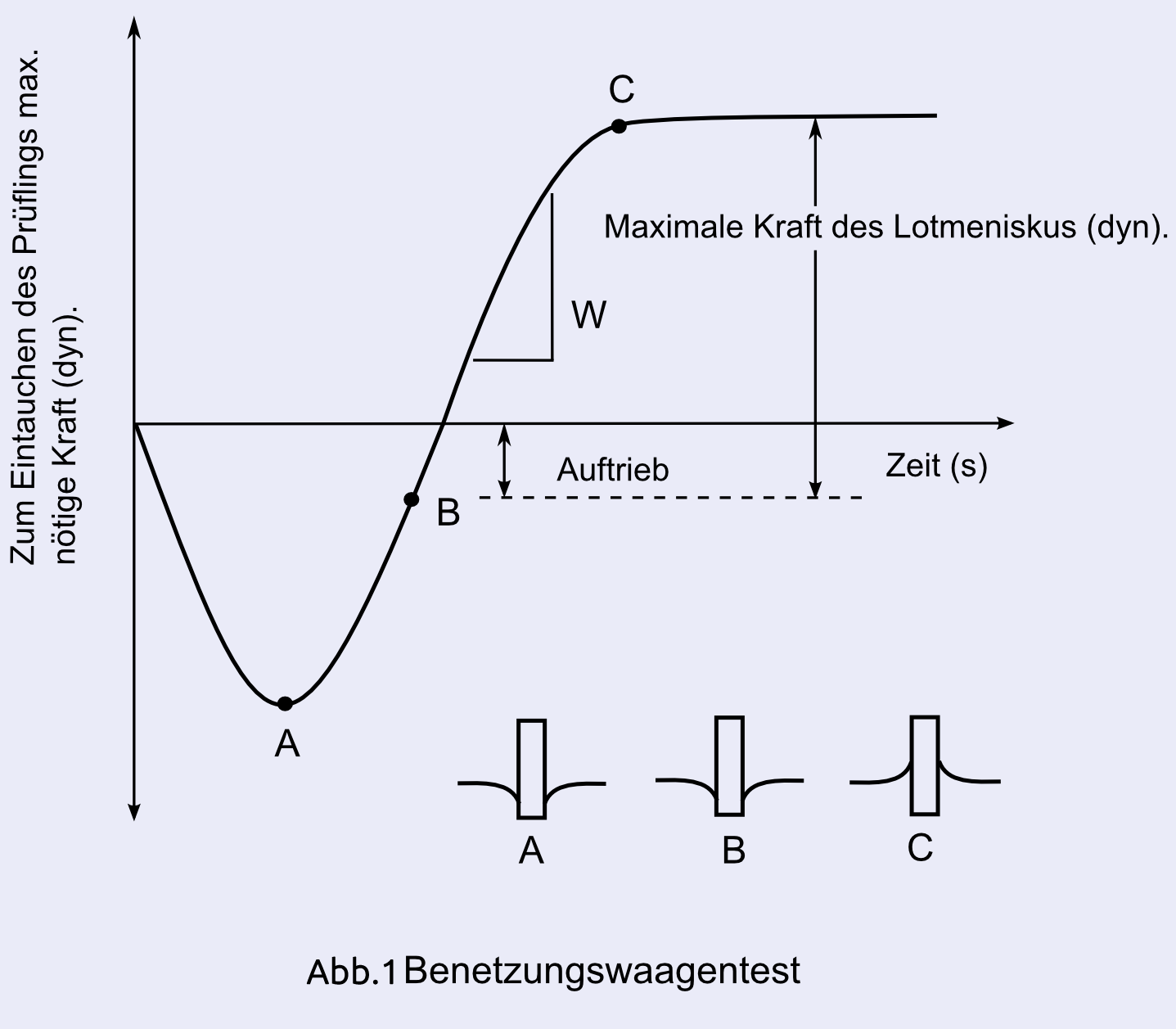
As a rule, a so-called wetting balance is used to measure the wetting ability of a solder alloy, or the effect of the flux required for this purpose. In this process, a test specimen is suspended from one end of a balance and immersed in a solder bath below. The surface tension and buoyancy of the solder bath push the test specimen upwards. At the same time, an external force (dyn) is applied to the test specimen to hold it in position. The degree of wetting of the test specimen by the solder bath can be assessed on the basis of the force required to maintain its vertical position.
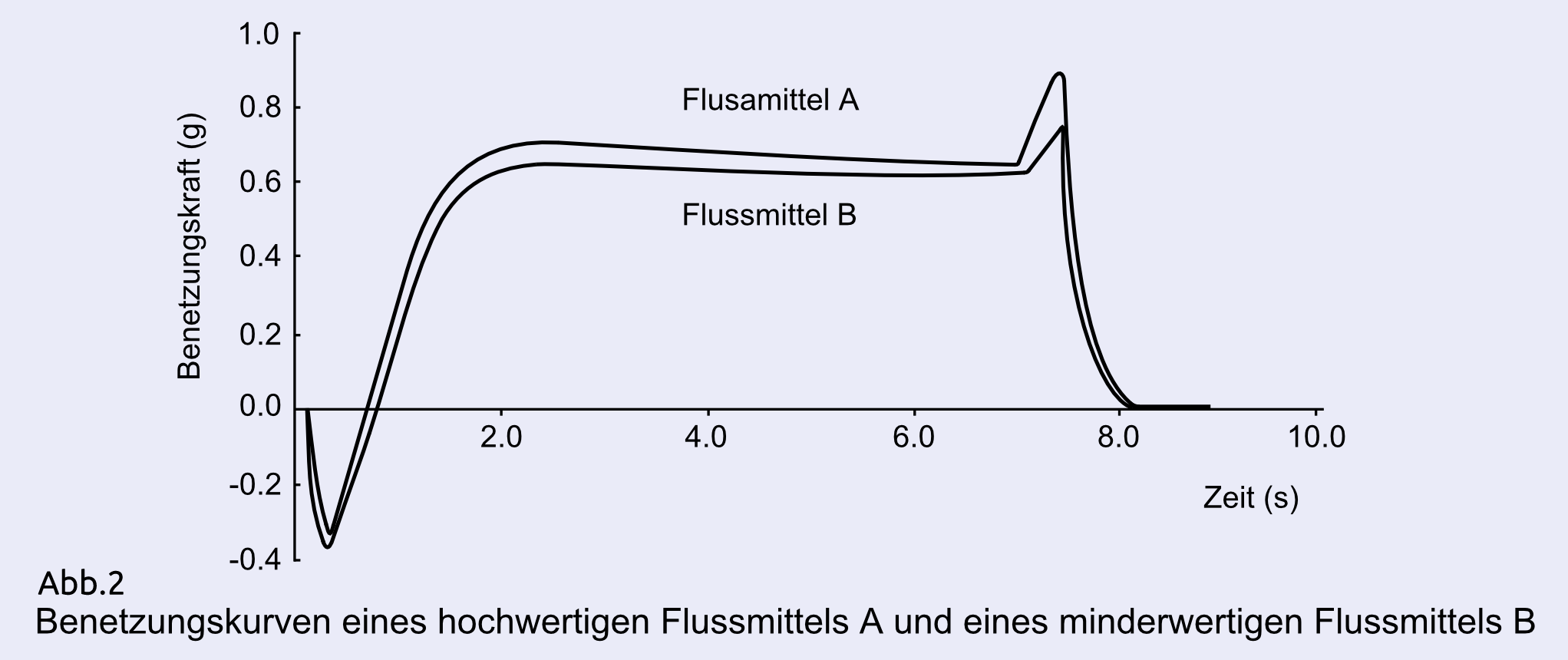
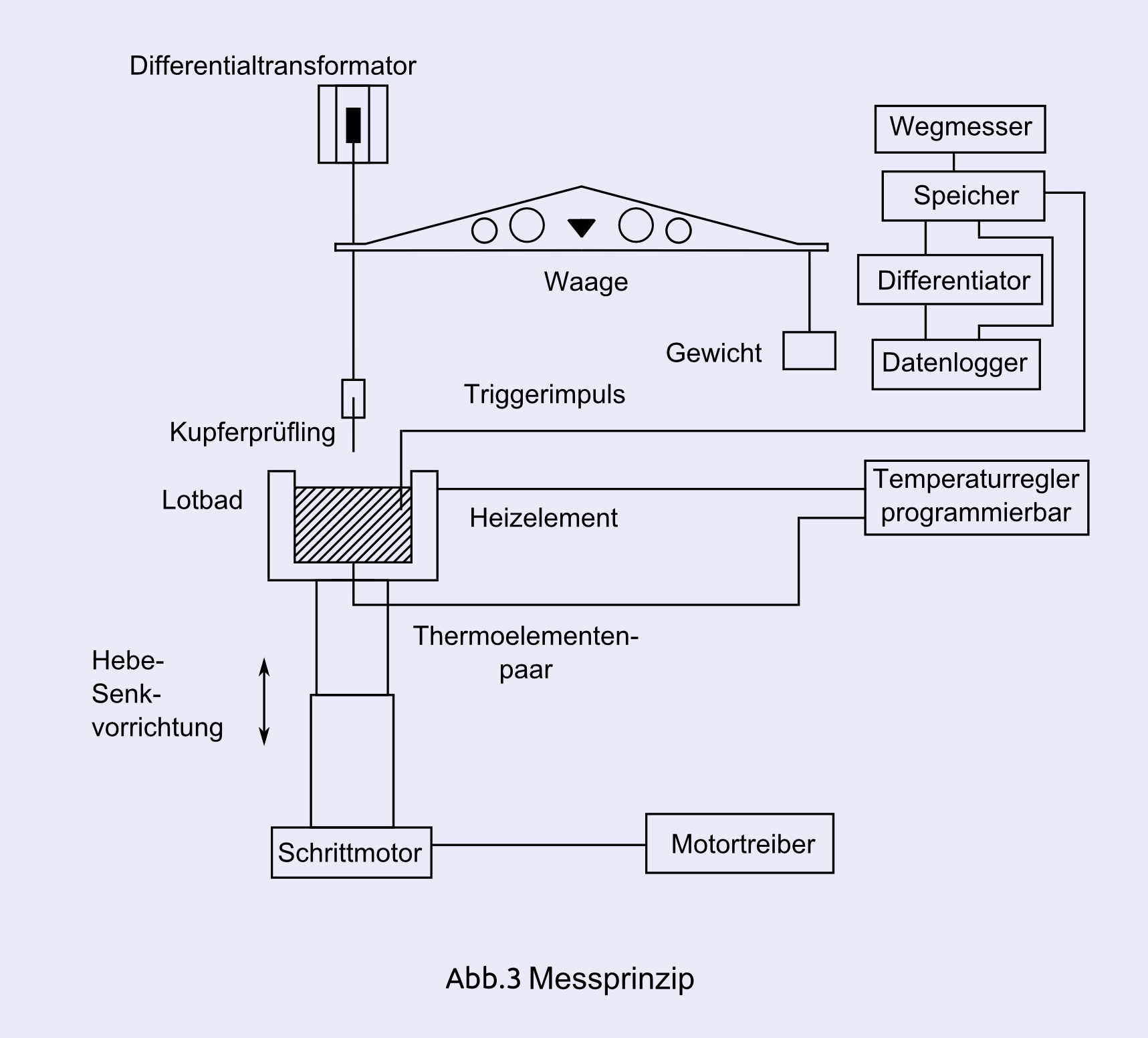
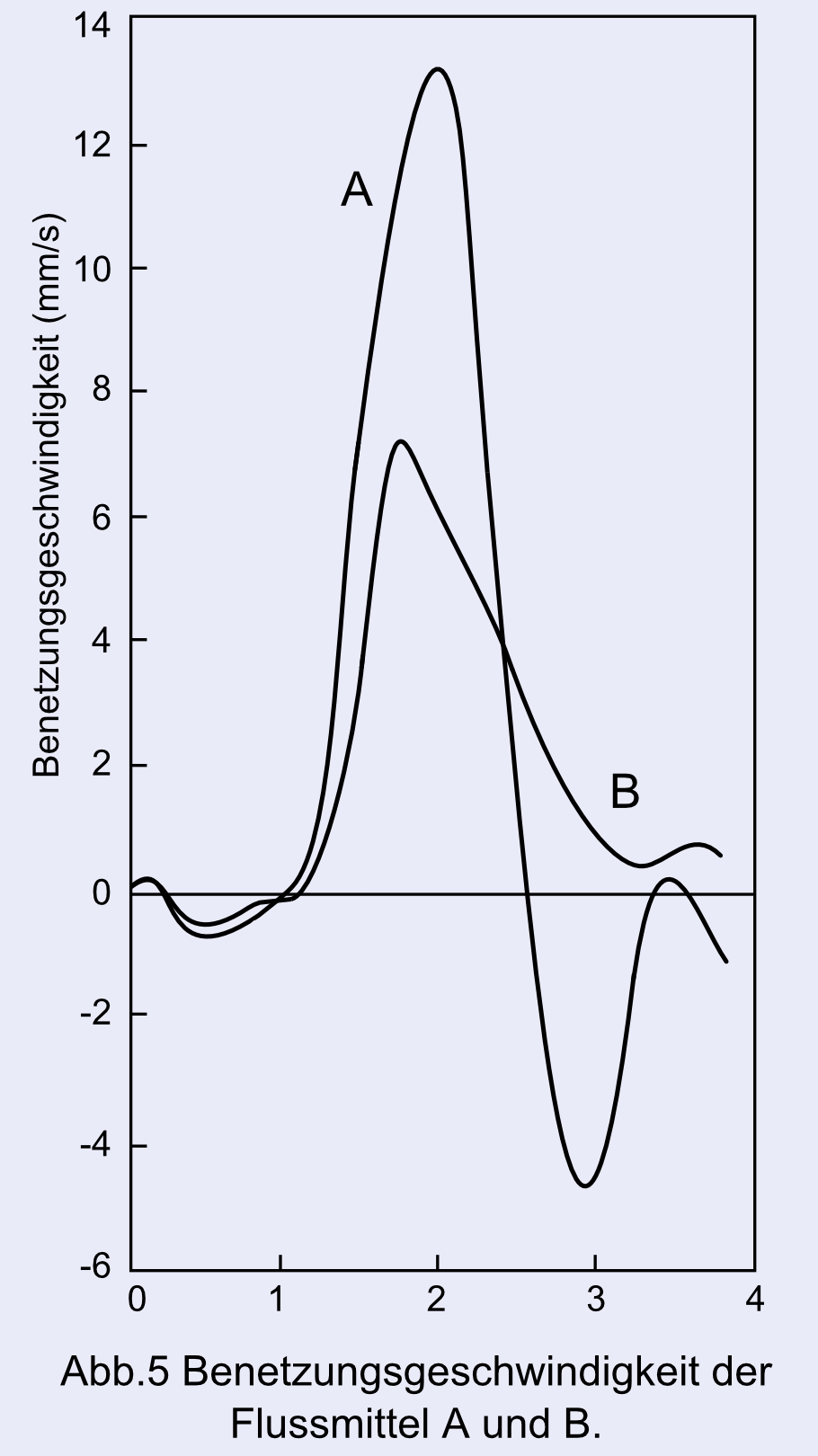
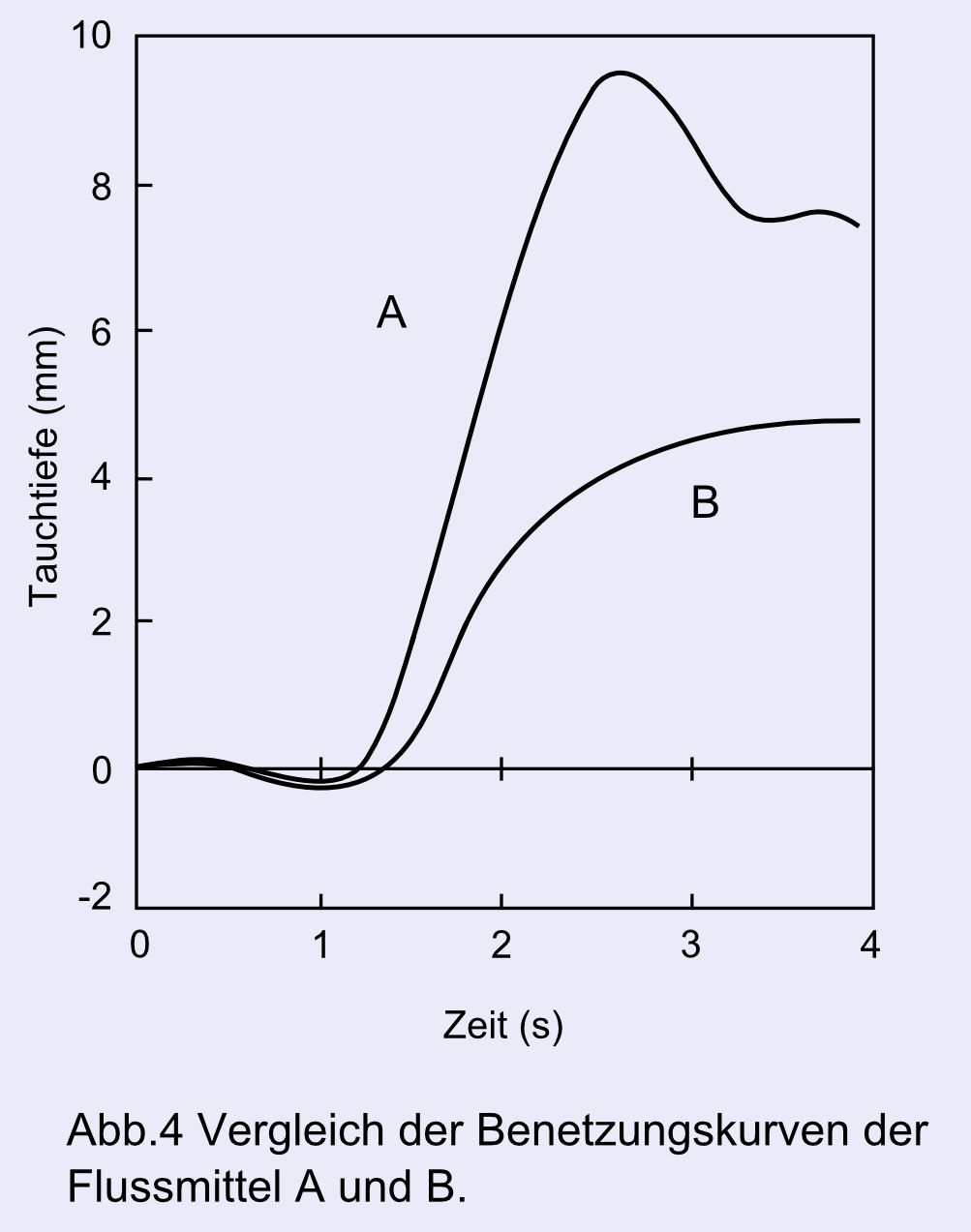
However, with the conventional method, the sensitivity of the force measurement is very limited, and there is a time lag relative to the actual movement of the test specimen. In today’s soldering processes, however, the efficiency of the flux and the associated time savings play a key role. Figure 2, for example, shows the wetting curves of two test specimens, each coated with the high-quality flux A and the low-quality flux B, as recorded by such a wetting balance. It is not possible to distinguish between the quality of the fluxes using this method. Manufacturers Nihon Almit and Shinku Riko have therefore jointly developed a new measurement method which directly determines the change in position of the test specimen using a differential transformer (see Fig. 3). This direct measurement is highly sensitive and also serves as a good indicator of the quality of the flux (see Fig. 4). The derivative of the movement curve (Fig. 5) provides direct information about the wetting rate at the start of the soldering process. The development of this measurement principle thus represented a major advance in research into soldering fluxes and solder alloys. → Meniscograph